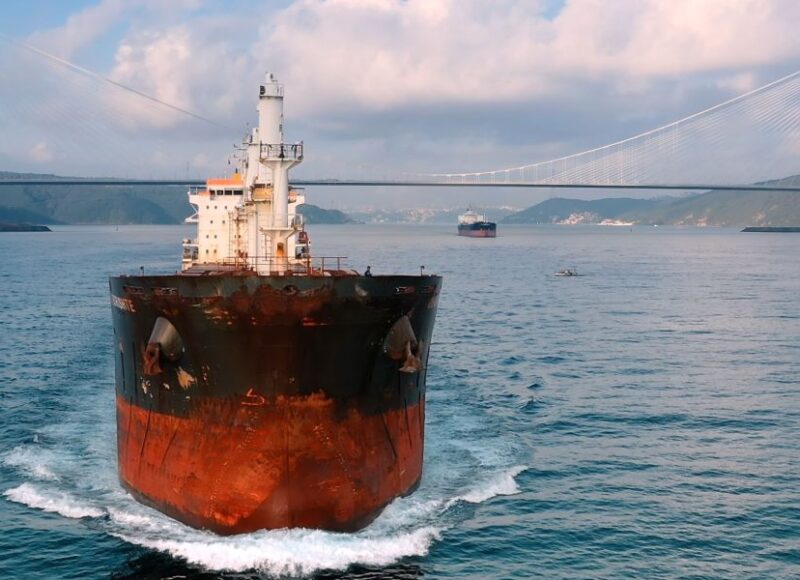
Building Connectivity, Managing Risk: The EU’s Geopolitical Role in the Black Sea
Building Connectivity, Managing Risk: The EU’s Geopolitical Role in the Black Sea


Policy Analysis 12 /2025
By Cengiz Günay, Ceren Çetinkaya, Klara Brunnsteiner, Justus Dehnicke & Sarah Pavlis
Executive Summary:
Situated at the crossroads between Europe, the Caucasus, Central Asia, and the Middle East, the Black Sea region is an energy hub (for oil and gas from Russia and the Caspian region) and a transit route for trade from China through Central Asia to Europe. Russia’s war on Ukraine has highlighted the need to diversify energy supplies and trading routes. The so-called Middle Corridor, a multimodal network of railways, ports and shipping lines across Central Asia and the Caucasus presents an alternative to the Northern Corridor through Russia. However, the ports on the Black and the Caspian Sea as well as railways along the Middle Corridor lack sufficient capacities for a sustainable long-term alternative. A feasible Middle Corridor would require large-scale investments. The recent Black Sea strategy of the EU marks a step toward recognizing the region’s strategic relevance, yet the EU’s engagement remains fragmented and underfunded. To consolidate its influence and contribute to lasting stability, this paper recommends that the EU should deepen engagement with regional actors, expand infrastructure investments, and integrate the Black Sea more explicitly into its broader connectivity and development agenda. The Black Sea Submarine Cable, a high-voltage connection designed to deliver clean electricity from the South Caucasus to Romania and Hungary represents the first concrete infrastructure project that aims to establish a direct connection between the East and West of the Black Sea. Despite political and economic risks and a rather limited impact on European energy security, the paper argues that the BSSC project provides an important testing case for the EU’s geopolitics of infrastructure.
Key insights:
- The Russian-Ukrainian war has reaffirmed the Black Sea as a critical geopolitical zone for European security, energy supply, and key trade routes.
- The Middle Corridor – a multimodal network of railways, ports, and shipping routes linking China with Europe via Central Asia, the Caucasus, and the Black Sea – offers an alternative to the Northern Corridor through Russia. Although transport along this route has expanded considerably since 2022, current infrastructure limitations prevent it from functioning as a fully sustainable long-term alternative. This requires strategic investments in connectivity infrastructure.
- There are two different routes within the Middle Corridor; one is the land connection through Turkey, the other a maritime route running from Georgia to Romania or Bulgaria.
- Regional instability makes investments risky. Democratic backsliding in Georgia, political volatility in Turkey, and ongoing war dynamics heighten political and security risks for large-scale infrastructure investments.
- Despite its geopolitical relevance, the Black Sea region has not been in the focus of global players. With low U.S. visibility and China’s selective, narrowly targeted investments, the EU faces a strategic opening to step in and become the primary norm-setter in the region. The EU needs to build partnerships and coalitions based on shared interests.
- Connectivity infrastructure is an important element of geopolitical agency. The EU needs to prepare for a post-war scenario and needs to act now. It requires calculated risk-taking in a volatile environment.
- The Black Sea Submarine Cable Project represents an important first step towards the diversification of connectivity in the region. It is a joint infrastructure project between Azerbaijan, Romania and Hungary and supported by the EU. It aims at transporting green energy from the Caucasus region into the EU.
Executive Summary Deutsch
Die Schwarzmeerregion liegt an der Schnittstelle zwischen Europa, dem Kaukasus, Zentralasien und dem Nahen Osten und ist ein Energieknotenpunkt (für Öl und Gas aus Russland und der Kaspischen Region) sowie eine Transitroute für den Handel von China über Zentralasien nach Europa. Der Angriffskrieg Russlands gegen die Ukraine hat die Notwendigkeit der Diversifizierung der Energieversorgungrouten und der Handelswege deutlich gemacht. Der sogenannte Mittelkorridor ist ein multimodales Netzwerk, bestehend aus Eisenbahnlinien, Häfen und Schifffahrtslinien, das China über Zentralasien und den Kaukasus mit Europa verbindet. Es stellt somit eine Alternative zum Nordkorridor durch Russland dar. Obwohl diese Verbindung eine deutlliche Verkürzung der Handelswege bedeutet, verfügen die Häfen am Schwarzen und Kaspischen Meer sowie die Eisenbahnstrecken entlang des Mittelkorridors nicht über die ausreichenden Kapazitäten, um langfristig eine nachhaltige Alternative zu bieten. Eine ökonomisch rentable und langfristig lebensfähige Alternative zum Nordkorridor würde umfangreiche Investitionen erfordern. Die jüngste Schwarzmeerstrategie der EU stellt einen wichtigen Schritt in Richtung Anerkennung der strategischen Bedeutung der Region dar. Allerdings ist das Engagement der EU ist nach wie vor fragmentiert und unterfinanziert. Um ihren Einfluss zu festigen und zu einer dauerhaften Stabilität beizutragen, empfiehlt dieses Papier der EU, ihre Zusammenarbeit mit regionalen Akteuren zu vertiefen, Infrastrukturinvestitionen auszuweiten und das Schwarze Meer expliziter in ihre allgemeine Konnektivitäts- und Entwicklungsagenda zu integrieren. Das Schwarzmeer-Unterseekabel Projekt, eine Hochspannungsverbindung, die grünen Strom aus dem Südkaukasus nach Rumänien und Ungarn liefern soll, ist das erste konkrete Infrastrukturprojekt, das eine direkte Verbindung zwischen dem Osten und Westen des Schwarzen Meeres herstellen soll. Trotz politischer und wirtschaftlicher Risiken und einer eher begrenzten Auswirkung des Projektes auf die europäische Energiesicherheit argumentiert die vorliegende Policy Analyse, dass das BSSC-Projekt einen wichtigen Testfall für die Geopolitik der EU im Bereich Infrastruktur darstellt.
Wichtigste Erkenntnisse:
- Der Russisch-Ukrainische Krieg hat das Schwarze Meer erneut als eine entscheidende geopolitische Zone für die europäische Sicherheit, die Energieversorgung und wichtige Handelsrouten bestätigt.
- Der Mittelkorridor – ein multimodales Netzwerk aus Eisenbahnverbindungen, Häfen und Schifffahrtsrouten, das China über Zentralasien, den Kaukasus und die Schwarzmeerregion mit Europa verbindet – stellt eine wichtige Alternative zum Nordkorridor durch Russland dar. Obwohl der Transport über diese Route seit 2022 deutlich zugenommen hat, verhindern bestehende Infrastrukturengpässe, dass sie zu einer dauerhaft tragfähigen Alternative werden kann. Dies würde strategische Investitionen in Infrastruktur notwendig machen.
- Innerhalb des Mittelkorridors bestehen zwei unterschiedliche Routen: Eine Landverbindung durch die Türkei und eine maritime Route, die von Georgien nach Rumänien oder Bulgarien führt.
- Regionale Instabilität macht Investitionen riskant. Der demokratische Rückschritt in Georgien, die politische Volatilität in der Türkei und die anhaltende Kriegsdynamik erhöhen die politischen und sicherheitspolitischen Risiken für groß angelegte Infrastrukturinvestitionen.
- Trotz ihrer geopolitischen Relevanz stand die Schwarzmeerregion bislang nicht im Fokus globaler Akteure. Angesichts der geringen Präsenz der USA und der selektiven, eng begrenzten Investitionen Chinas eröffnet sich für die EU ein strategisches Fenster, um einzutreten und zur zentralen Normgeberin der Region zu werden. Die EU muss Partnerschaften und Koalitionen auf der Grundlage gemeinsamer Interessen aufbauen.
- Konnektivitätsinfrastrukturen sind ein zentraler Bestandteil geopolitischer Handlungsfähigkeit. Die EU muss sich auf ein Szenario nach dem Krieg vorbereiten und bereits jetzt aktiv werden. Dies erfordert kalkulierte Risikobereitschaft in einem volatilen und instabilen Umfeld.
- Das Black Sea Submarine Cable Project stellt einen wichtigen ersten Schritt zur Diversifizierung der Konnektivität in der Region dar. Es handelt sich um ein gemeinsames Infrastrukturvorhaben Aserbaidschans, Rumäniens und Ungarns, das von der EU unterstützt wird. Ziel ist es, grüne Energie aus dem Kaukasusraum in die EU zu transportieren.
Keywords: Black Sea, EU, Geopolitics, Infrastructure, Energy, Transport
Introduction
Located at the intersection of Europe, the Caucasus, Central Asia, and the Middle East, the Black Sea has historically been of paramount strategic importance for Russia. The Black Sea has provided Russia access to the "warm seas". Much of its oil, gas, and grain exports have moved via Black Sea ports or the Blue Stream and TurkStream submarine pipelines.
Moreover, Moscow has seen the Black Sea as a battlefield of its struggle against Western hegemony and NATO encroachment (Sabanadze & Dalay 2025, Marciacq 2024). It is therefore no coincidence that resurgent Russian expansionism first reappeared in the "near abroad" in the Black Sea basin. In 2008, Russia waged war against Georgia to back separatists in South Ossetia and Abkhazia, to be followed by the annexation of Crimea in 2014, culminating in 2022 in the full-scale invasion of Ukraine.
Long overlooked by the EU and NATO as a peripheral theatre, the war has highlighted the Black Sea region’s importance for European security, energy supply, and trade. The region is a key component of the so-called Middle Corridor connecting China via Central Asia, the Caucasus, and the Black Sea region with Europe. Also known as the Trans-Caspian International Transport Route (TITR), the Middle Corridor – a multinodal transport route – has presented an alternative to the Northern Corridor, a railway system running from China through Russia and Belarus into the EU. In reaction to the war, the Middle Corridor has been discussed as a necessity for diversifying Europe’s energy supply and securing alternative transit routes between Europe and Central Asia and China.
However, despite growing interest from European transport and railway companies, the Middle Corridor is far from being sustainable. Railway connections and the capacity of ports along the route – in the Caspian Sea as well as the Black Sea – are weak. A long-term, economically feasible Middle Corridor connection in a post-war scenario would require substantial infrastructure investments. Setting aside the question of financing, there is also a wide range of other challenges to the Middle Corridor. Beyond open warfare, the region is characterized by political fragmentation, instability, economic crisis, limited interconnectivity, and aging infrastructure. Georgia and Turkey are essential to the Middle Corridor’s role in facilitating trade and energy diversification, yet both face political instability and maintain somewhat uneasy relations with the European Union. While regional infrastructure would need planning and joint coordination, so far, there is no effective regional institutional framework. Therefore, connectivity infrastructure projects and their implementation remain fragmented.
The European Union has now understood the Black Sea‘s geostrategic importance. In 2025, the Commission published its first Black Sea Strategy, which, among other things, highlights the need for connectivity infrastructure. In an environment shaped by fierce geopolitical competition, the EU must adopt a firmer and more proactive stance if it wants to become a relevant actor on the geopolitical stage. The Union needs to take risks and forge regional interest partnerships as it can no longer rely on its normative appeal nor on strategic and political alignment with the United States.
This policy analysis focuses on the region’s geopolitical relevance to European security through a focus on connectivity and infrastructure. It argues that the need for diversifying Europe’s supply routes requires risk-taking and strategic investments. In the long term, the Middle Corridor offers the EU a chance to diversify routes, enhance resilience, and reinforce its geopolitical presence in its immediate neighborhood. The paper analyses existing connectivity infrastructure and explores more closely the case of the Black Sea Submarine Cable, a high-voltage undersea line designed to deliver clean electricity from the South Caucasus to Romania and Hungary as a concrete infrastructure project in the region.
1. The Black Sea’s Fragmented Regional Order
Despite being frequently referred to as a “region,” the Black Sea lacks a shared identity or the institutional coherence that would typically define a region. Despite initiatives such as the Black Sea Economic Cooperation (BSEC), regional cooperation frameworks have remained weak. Russia has traditionally sought dominance to secure its access to the “warm seas”. This created in the past various conflicts with Turkey, which controls the two chokepoints – Bosphorus and Dardanelles – connecting the Black Sea with the Marmara Sea and the Aegean.[1]
In more recent times, Russia’s policies have aimed at driving back Western influence in the region. Rather than regional governance institutions, Russia has long pursued the vision of a condominium with Turkey, where Moscow dominates the northern shores and Turkey the southern shores of the Black Sea basin (Sabanadze & Dalay 2025). This has complicated efforts to address common security challenges, from environmental degradation to transnational crime and irregular migration.
Now, the war in Ukraine has transformed the Black Sea into a geopolitical frontline. Russia’s military build-up in the Black Sea has led to a growing convergence of strategic interests between NATO, the EU and Turkey.
Situated in a strategically pivotal position, Turkey plays a central role in the emerging competition over connectivity, transport, and energy routes. Controlling access to the Black Sea through the Straits and serving as a land bridge between the Middle East, the Caucasus, and Europe, it has long leveraged its geostrategic position in relations with the EU and the United States. Yet, Turkey has lacked the infrastructure and resources to pursue more autonomous policy choices. Its security has been shaped by NATO membership, its energy supplies have depended on Russian imports, and Europe has remained its key trading partner.
Turkey has tried to balance its dependencies and avoid confrontational policies towards Moscow. Ankara has rather adopted a stance of neutrality toward the two warring parties, consistent with its longstanding practice of avoiding direct entanglement in conflicts in its European neighborhood. Although Ankara has refrained from joining the EU’s sanctions regime and has preserved channels of political dialogue and economic exchange with Russia, it is in dire need of foreign investments and partnerships. However, while Turkey’s strategies largely align with the EU’s interest in diversifying trade and energy supply routes, Ankara does not subordinate itself to EU policies. Despite its status as an EU candidate and NATO member, it has simultaneously cultivated closer ties with BRICS and the Shanghai Cooperation Organisation (SCO). Ankara’s expectation to be treated by the EU as an equal partner rather than a junior partner reflects Turkey’s broader self-positioning as a middle power.
Georgia, on the eastern shores of the Black Sea, is also key to connectivity along the Middle Corridor. A segment of the Middle Corridor is planned to run through Georgia. While roughly 20 percent of its territory is controlled by Russia, Georgia, is aside Turkey also an official candidate for full membership to the EU. In reaction to gradual autocratization and steering towards Moscow under the ruling Georgian Dream Party, the country has been characterized by mass protests and instability. Over the years, Russia has increasingly expanded its economic and cultural influence in the country, at the cost of the EU. These developments have undermined Georgia’s EU accession process and aspirations for NATO membership. Russia’s military build-up in the Eastern Black Sea and military bases in Abkhazia have even further limited Georgia’s options.
Armenia, Azerbaijan, and Iran are significant geopolitical actors in the wider Black Sea Basin. Armenia and Iran seek to enhance connectivity through the Persian Gulf–Black Sea Corridor, linking Iran to the EU via the Caucasus. Simultaneously, Tehran and Moscow are advancing the International North–South Transport Corridor (INSTC), which aims to connect India through Iran and Azerbaijan with Russia, offering a shorter and cheaper alternative to the Suez route (Joja, 2024).
Considering the region’s geostrategic relevance, global powers such as the United States and China have shown relatively little interest in it. While the United States has remained largely absent, the region has also not featured prominently in Beijing’s Belt and Road Initiative. Although China’s economic footprint in the Black Sea remains limited, it is gradually expanding its presence through selective investments and infrastructure projects. (Sabanadze and Dalay, 2025). For Kazakhstan and Azerbaijan, the Black Sea seems to be a vital lifeline for maintaining access to global markets, particularly as they seek to reduce reliance on Russian-controlled transit.
Acknowledging the region’s geopolitical importance for European security, the EU launched in May 2025 the Black Sea Strategy. The Strategy aims to replace previously fragmented and rather issue-specific approaches to the region (Tsantoulis 2020, 62) with a clear emphasis on projects and investments in areas such as maritime security, environmental protection, and connectivity. Additionally, as a sign of the EU’s new emphasis on the Middle Corridor, the Union launched the first Ministerial Meeting on Cross-Regional Security and Connectivity in October 2025, bringing together Black Sea, South Caucasus, and Central Asian countries with a Cross-Regional Connectivity Agenda (European Council 2025). While details of the agenda have not been revealed, it is considered an important first step for the EU’s strategic positioning in the region.
2. The Middle Corridor – A Critical Infrastructure Bottleneck
Critical infrastructure encompasses all assets essential to economic and military security, as well as to national morale (Moteff et al. 2003). The concept is broad, and its definition is shaped by shifting priorities and may differ across governments and periods.
In an environment increasingly shaped by power politics, rivalry and hybrid warfare, connectivity infrastructures cannot be merely seen as neutral spaces of exchange, but they have become arenas of geopolitical competition and confrontation (Cowen, 2019). The so-called Middle Corridor represents an example of geopolitical infrastructure projects. It is a multimodal network of railways, ports and shipping lines connecting Asia with Europe. Compared with the Northern Corridor through Russia, the Middle Corridor reduces distances by approximately 2,500 kilometers (Aguiar 2025). Also, the economic profitability has increased since Russia’s full-scale attack on Ukraine in 2022. In 2024, the route saw an increase of 63 percent (Aguiar 2025). The World Bank estimates that with adequate infrastructure investment, the trade volume of the Middle Corridor could reach eleven million tons by 2030 (Dupuy 2024).
However, despite an increase in freight transports, in the context of an emergent post-2022 new European security architecture, the project appears less as an economically driven initiative but rather as a geopolitical necessity. It represents an Eurasian infrastructure framework that is not controlled by Russia. As such, it is not only of importance to the EU, but also to countries along the route such as Georgia and Kazakhstan which also seek to reduce their dependencies on Russia and deepen relations with the EU. Thus, whereas the EU and Central Asian partners regard the Middle Corridor as a means of diversifying energy supplies and transport routes, Moscow interprets the initiative as a further encroachment upon Russia’s geopolitical security interests.
The Middle Corridor connects Xi’an, one of China’s key logistic hubs via multimodal networks of railways, ports and shipping lines with the EU’s railway system. There are two routes through the Black Sea region: a land connection through Turkey and a maritime connection through Georgia. Entry points into the EU are either the ports of Constanța in Romania or Varna in Bulgaria, or for the land connection through Turkey the railways in Greece and Bulgaria. The longest section of the Middle Corridor’s railway connection runs from the Chinese border through Kazakhstan to the port of Aktau on the Caspian Sea. Although shipping routes across the Caspian to the port of Baku in Azerbaijan are not yet fully developed, the railway line linking Baku with Tbilisi in Georgia and onward to the eastern Turkish city of Kars has been operational since 2017. This section had long been closed due to the Nagorno-Karabakh conflict (Dupuy 2004).
Despite the Middle Corridor’s growing geostrategic and economic relevance ports on the Caspian Sea and the eastern Black Sea remain a major bottleneck (ISDP, 2025). Ports are critical nodes not only for trade and transport routes, but also for the intersection of digital corridors. Although the transport and logistics sector in Georgia grew in 2024 by 14 percent (BTU AI, 2025), Georgian ports such as Batumi, Anaklia, and Poti do not have the capacity for high-volume cargo shipments. There are only a few shipments from Georgia to Romania. Constanța in Romania is the region’s largest port, but it still lacks sufficient capacity. Beyond insufficient infrastructure, maritime routes across the Black Sea are also insecure. At the end of November 2025, Ukrainian naval drones hit tankers in the Black Sea. Therefore, for now, most freight moving along the Middle Corridor is routed through Turkey to its Mediterranean ports. In Turkey, the southern route within the Middle Corridor, railway connections are insufficient, limiting throughput capacities. To foster its role as a transit hub linking Central Asia, the Caucasus, and Europe, Turkey has launched its “Asia Anew” strategy in 2019. The strategy foresees investments in transport infrastructure, particularly in ports and railways (Colibasanu, 2024). Part of the plan is to modernize railway connections between Divriği and Kars – a central segment of the Trans-Caspian International Transport Route – through a 660-kilometre upgraded railway route. The project is financed by a 660 million USD World Bank loan (The World Bank 2024).
Similarly, railways in Kazakhstan, Georgia and Romania need modernization. In Romania, for example, less than 11% of overall cargo volumes were transported by rail in 2023 (Turi and Boglut, 2024, 68), as the country’s rail network is in dire need of renovation and upgrading. There is also a lack of deep-water ports on the Black Sea. Deep water ports enable larger cargo ships to dock, essentially increasing both cargo capacity and transport efficiency (Standish and Pertaia, 2024).
So far, European public and private investments have remained limited. Although the EU’s European Global Gateway Initiative aims at strengthening connectivity across the digital, energy, and transport sectors. A relatively small portion of around 13.9 billion EUR was expected to be invested in the Eastern Neighbourhood under its Economic & Investment Plan.
However, the EU and its member states have increasingly recognized the need to bolster resilience in the Black Sea. A key concept in this context is dual-use infrastructure – facilities that can serve both civilian and military purposes. Bulgaria has pledged to invest 6 billion EUR of its national budget into road and railway infrastructure, fostering both trade and security across Eastern Europe (Euractiv, 2024). Meanwhile, the EU has committed up to 16.68 billion EUR in loans to Romania through the European SAFE Programme (Government of Romania, 2025). These developments highlight that member states and Brussels increasingly view connectivity as a key instrument for ensuring security across Eastern Europe in times of imminent threat. They also demonstrate the EU’s gradual shift from viewing connectivity as a purely economic issue toward recognizing it as a geostrategic security concern.
To further protect critical infrastructure in the region, the EU plans to establish a Maritime Security Hub in the Black Sea, intended to provide early warning capabilities and monitoring from space (DW, 2025). By integrating security considerations into transport planning, the EU effectively redefines connectivity as a strategic defense instrument. However, this initiative remains in the planning stage, with central details, such as location and participating countries, still unclear. Overall, more concrete steps, funding schemes and initiatives will be required to ensure its effective implementation.
At the same time, Kazakh and Chinese companies have increasingly invested in the upscaling of Black Sea ports along the Middle Corridor. Kazakh KazMunayGas has recently signed an economic agreement with the Romanian Chamber of Commerce. There are plans for a 1.12 billion EUR investment in port infrastructure and the construction of new deep-water berths (Ministerul Transporturilor și Infrastructurii, 2024). China is one of the major investors in a new deep-water port in Anaklia, a key component of the Middle Corridor through Georgia (Standish and Pertaia, 2024). But the Anaklia Deep-Sea Port is still in its early construction phase and it stands as an exception in the region (RAND, 2025). Therefore, considering the region’s geopolitical relevance, Chinese investment levels have remained rather low. There are unconfirmed reports of potential Chinese interest in contributing to the proposed 60 billion USD railway upgrading in Turkey (Jennings, 2025). However, overall Chinese investments in Turkish infrastructure have been rare and in view of the slowing down of the Chinese economy large-scale Chinese investments in the region are rather unlikely in the near future. The same can be said of U.S. involvement in the development of critical infrastructure in the region.
The limited involvement of global actors and the convergence of regional states’ interests with those of the EU in reducing Russian influence create new opportunities for joint infrastructure projects.
While the region’s direct exposure to conventional and hybrid warfare, political fragmentation, and instability in several states makes potential infrastructure projects more vulnerable, the involvement of a variety of actors can also increase security. Chinese as well as Kazakh, Turkish or Azeri involvement might reduce the likelihood of Russian attacks. Hence, countries along the Middle Corridor are necessary partners in the EU’s efforts to achieve diversification, security, and geopolitical relevance.
3. The Black Sea – An Energy Hub
The Black Sea is also an important hub for Russian energy exports. The Russian Black Sea port of Novorossiysk plays a major role in Russian oil and liquid gas shipments. Novorossiysk is also the endpoint of the Caspian Pipeline Consortium (CPC), which connects the Russian port with Tengiz in Kazakhstan. CPC handles more than one percent of global oil (Reuters, 2025a).
There are two offshore gas pipelines connecting Russia and Turkey. TurkStream runs approximately 1000km under the Black Sea from the Russkaya compressor station in Russia to Kıyıköy on the European Turkish coast, delivering up to 31.5 bcm of natural gas annually with the capacity to provide heat for approximately 15 to 20 million households (TurkStream Project, 2025). Most of the gas is transported via Bulgaria onward to the European Union. Blue Stream, in turn, runs under the sea from Beregovaya to Samsun. It is about half the capacity of TurkStream per year. Together, they provide large parts of Turkey’s growing energy demand. Nevertheless, much of the gas is then exported into the EU.
Initiatives such as Romania’s Neptun Deep project and Georgia-Azerbaijan’s renewable energy links contribute to the EU’s broader objective of diversifying energy routes and establishing “green corridors” across the Black Sea.
Another key energy link in the region is the Trans-Balkan gas pipeline, connecting Ukraine, Moldova, Romania, Bulgaria, and Turkey. Although partially underused since TurkStream went operational, the system remains technically reversible and has recently been reactivated to support Ukraine’s winter energy needs through LNG imports from Azerbaijan and the United States. Its strategic importance has made it a target of Russian drone strikes in August 2025. Additional connections include the Baku–Supsa (Western Route Export) Pipeline, linking Azerbaijan to Georgia’s Black Sea port of Supsa with a capacity of around 145,000 barrels per day(Aghjayev, 2023). It resumed limited operation in 2024 after wartime suspension. In mid-2025, Georgia’s Oil and Gas Corporation announced a strategic review of the route’s long-term viability, highlighting its role in mitigating Russian monopolistic control over hydrocarbon flows to Europe (Razmadze, 2025).
The EU’s aim to diversify energy supplies converges with Turkey’s interests to reduce its own energy dependence on Russian gas imports. Offshore gas exploration in the Black Sea led in 2022 to the discovery of the Sakarya gas field off the Turkish Black Sea coast. With an estimated reserve of around 600 billion cubic meters, it is expected to meet a large part of Turkey’s own gas demands (Anadolu Ajansı, 2022). However, in the long run, Turkey cannot solely rely on domestic and Russian gas. Future projects on green energy supply from Central Asia and from the Gulf countries could and should include Turkey. Cooperation on energy infrastructure projects with Turkey would support the EU’s diversification strategy and foster an emergent geostrategic alliance – built on connectivity – in the Black Sea region.
4. The Black Sea Submarine Cable Project – Ambition, Promise, and Barriers
Within Europe’s evolving connectivity architecture, the Black Sea Submarine Cable (BSSC) stands out as one of the most symbolically and strategically charged initiatives. Developed jointly by Azerbaijan, Georgia, Romania, and Hungary, the project represents far more than a technical infrastructure scheme: it is a test case for whether Europe and its partners in the South Caucasus can build resilient, rules-based, and sustainable connectivity in one of the world’s most contested maritime regions.
Beyond just a power transmission line, the BSSC represents a shift in the EU’s energy stance towards its neighbours in the East, side-stepping traditional transit routes. Economically, the BSSC surpasses the cost-benefit threshold required by the European Network of Transmission System Operators for Electricity (ENTSO-E), has been included in its Ten-Year Network Development Plan (TYNDP) and has now been officially accepted as a Project of Mutual Interest (PMI) under the Trans-European Networks for Energy (TEN-E) Regulation. Combining a high-voltage direct current (HVDC) electricity line with a parallel fibre-optic cable, the project aims to establish a direct physical submarine connection between the EU and the South Caucasus and potentially Central Asia. In doing so, the BSSC embodies the EU’s vision of connectivity as strategic resilience- an infrastructure that simultaneously advances energy diversification, digital sovereignty, and geopolitical autonomy.
Technically, the BSSC is one of the most ambitious projects ever conceived for the wider Black Sea, setting out to create the first direct energy interconnection between the European Union and the South Caucasus. Serving both as an energy corridor and a digital bridge between regions, the project’s estimated cost of between 3.1 and 3.6 billion EUR, supplemented by an additional 70–90 million EUR for the digital fibre-optic cable (Hajiyev, 2025). Institutional cooperation has advanced further than many previous regional initiatives. The Green Energy Corridor Power Company, a joint venture of the transmission system operators of Azerbaijan, Georgia, Romania, and Hungary, has been established in Bucharest to oversee implementation. Preparatory financing from the World Bank’s ESPIRE program covers seabed surveys and onshore grid upgrades, while the European Commission has endorsed the project politically under both the Global Gateway and the Middle Corridor frameworks.
For Azerbaijan, the BSSC marks a strategic evolution in its foreign policy and energy diplomacy. Traditionally reliant on hydrocarbons, Baku now seeks to rebrand itself as a “green energy hub” of the Caspian, exporting renewable electricity and, eventually, hydrogen to European markets. This pivot allows Azerbaijan to maintain geopolitical relevance while aligning with the EU’s decarbonization and diversification goals, framing its energy exports in a rhetoric of sustainability and mutual benefit. For Georgia, the project serves as a crucial opportunity to reinforce its position as a transit bridge between Asia and Europe, leveraging its hydropower potential. Meanwhile, Romania and Hungary view the cable as a means to strengthen energy security and grid integration within the EU. From Brussels’ perspective, the BSSC epitomizes sustainable, cross-regional connectivity, bypassing the traditional chokepoints of Russian and Turkish control.
Beyond its technical specifications, the BSSC carries profound geopolitical meaning. It represents an EU-aligned model of infrastructure governance. The BSSC provides an alternative route for green energy supplies and thereby reinforces the EU’s efforts to reduce strategic vulnerabilities.
Its dual-use capacity, aiming at transmitting both clean electricity and high-speed data, directly supports the EU’s twin transition toward green and digital resilience. If realized, the project would strengthen the EU’s geopolitical position and leverage in relations with potential partners as Turkey, as well as adversaries such as Russia.
Predictions related to the feasibility of the project have sometimes been mixed, with the most immediate vulnerability lying in Georgia’s domestic political trajectory. Growing democratic backsliding and strained EU relations had weakened investor confidence, with the World Bank’s 2025 report assessing various facets of the development of the project, raising the project’s political risk category from substantial to high, citing governance and regulatory uncertainty (Huenteler 2025). Since Georgia is the key territorial connector and regulatory anchor of the cable, instability in Tbilisi could delay or even jeopardize the project’s viability (Margvelashvili 2025). While some of the political, security, and coordination challenges – especially the security risks of operating in the militarised Black Sea – persist, some obstacles can be mitigated by growing EU backing.
With the European Commission’s December 2025 decision to grant the BSSC Project of Mutual Interest (PMI) status, many of the previously theorised barriers have been substantially reduced. PMI designation provides accelerated permitting, CEF funding eligibility, and coordinated regulatory support, giving the project a clearer pathway to implementation and demonstrating that the EU remains committed to long-term engagement in the Black Sea region. In this sense, the challenges once associated with the BSSC now appear less as structural impediments and more as issues that the EU is actively addressing – confirming that regional integration is progressing, and that Brussels intends to deepen connectivity regardless of earlier uncertainties.
Ultimately, the Black Sea Submarine Cable is not merely an engineering project; it is a litmus test for Europe’s capacity to build strategic connectivity beyond its borders. Its successful completion would signal that the South Caucasus can integrate with Europe based on sustainability, transparency, and shared governance- turning rhetoric on “green corridors” into concrete geopolitical architecture. Yet this cooperation carries deeper political implications. Overlooked in many favorable narratives is Azerbaijan’s strategic use of the project to consolidate its post-war legitimacy after Nagorno-Karabakh. While the BSSC could promote regional integration and peacebuilding, it also risks normalizing Baku’s actions and exposing the EU’s readiness to sidestep human rights concerns for the sake of energy security. In the end, the BSSC encapsulates both the promise and the paradox of Europe’s external connectivity agenda: it can help diversify supply routes while simultaneously undermining the moral authority it claims to project.
Conclusion
In an era marked by war, geopolitical rivalry, and rising tensions, the Black Sea region holds significant strategic importance for Europe’s security and supply routes. The region functions as an energy hub and forms a crucial segment of the so-called Middle Corridor, a multinodal transit route connecting Asia with Europe. The Middle Corridor has gained new relevance since Russia invaded Ukraine, as it provides an alternative to the Northern Corridor running through Russia. Although the Middle Corridor significantly reduces distances, until now, the infrastructure linking East and West – ports, railways, and digital cables – remains underdeveloped. Substantial, coordinated investments would be required to transform the Middle Corridor into a viable economic opportunity.
Although the EU has acknowledged the Black Sea region’s strategic relevance and initiated political dialogue, concrete funding commitments for large-scale infrastructure remain limited. In this vacuum, external actors such as Azerbaijan and Kazakhstan have taken the lead in expanding and modernizing infrastructure along the Middle Corridor. For both countries, the corridor offers a strategic opportunity to diversify trade routes and reduce structural dependence on Russian transit networks. One prominent example is the Black Sea Submarine Cable project, initiated by Azerbaijan. If implemented, it would create a direct transmission route for green energy from Azerbaijan to Romania and subsequently to Hungary, thereby strengthening regional connectivity and Europe’s energy diversification efforts.
At the same time, Turkey as a key regional actor has announced new investments in railway routes linking the country’s east and west, further underscoring the country’s growing focus on positioning itself as a hub for energy and transport. Chinese infrastructure investments in the region have remained scarce, in contrast to China’s strong involvement in other regions such as Africa. Chinese investors may view the area as too fragmented and too insecure, and China appears less concerned about developing trade routes that bypass Russia.
The geopolitical landscape of the region presents new opportunities but also significant risks for the European Union. The relative absence of China and the United States strengthens the EU’s potential role, creating space for more proactive engagement. A coordinated geopolitical strategy that prioritizes connectivity and infrastructure projects in and around the Black Sea would enable the EU to shape key hubs, routes, and nodes along what could become an important future trading corridor. Such an approach would not only support the diversification of trade, energy, and supply routes, but also help deepen relations with countries in Central Asia and the Caucasus. However, intensified EU involvement in the region also opens an additional front of confrontation and rivalry with Russia. Moscow views the Black Sea as its natural sphere of influence, and EU-backed investments could be vulnerable to sabotage or hybrid operations. Georgia, one of the pivotal countries along the Middle Corridor, has already been exposed to heightened Russian pressure. The country continues to struggle between its democratic, pro-European aspirations and an increasingly authoritarian government, underscoring the fragility of regional stability.
A geopolitical Union, as proclaimed by Commission President Ursula von der Leyen, requires a long-term strategy, self-confidence, coordinated action, strong partnerships, and a willingness to take calculated risks. Although Russian threats are real and significant, the EU cannot allow its policies to be shaped primarily by intimidation. Instead, it should deepen partnerships with the countries along the Middle Corridor and coordinate efforts more closely. The involvement of diverse actors, under EU leadership, would enhance the security and resilience of infrastructure projects. Energy and transport infrastructure in the Black Sea region is of vital geopolitical interest to the EU.
To avoid perceptions of European dominance, the EU should support joint ventures with local companies, which would also increase the feasibility and local acceptance of these initiatives. Moreover, infrastructure projects in the Black Sea region should be integrated into the Global Gateway Initiative to ensure strategic coherence, financial leverage, and long-term sustainability. In this regard, the Black Sea constitutes an important test case for the EU’s ambition to become a truly geopolitical actor. Europe’s ability to navigate competing interests will shape whether the region evolves into a zone of secure connectivity or becomes a case study in infrastructural vulnerability.
There is a need for a comprehensive connectivity strategy for the Black Sea region, one that is supported by tangible investments and incorporates the following elements:
- Energy diversification, aimed at reducing dependence on single-route or single-supplier systems.
- Digital infrastructure investment, to strengthen the European digital corridor toward Asia.
- Cybersecurity and hybrid-threat resilience measures to protect both critical infrastructure and public support mechanisms.
- Enhanced regional cooperation with littoral states under the frameworks of the Global Gateway Initiative and the EU’s Black Sea Synergy policy.
Such measures would not only improve the EU’s energy and digital security architecture but also contribute to regional stability and the long-term strategic autonomy of the European Union in an increasingly contested geopolitical environment.
[1] Passage through the Straits has been regulated by the Montreux Convention, signed in 1936. The Convention confirms Turkey’s sovereignty over the Bosporus, the Dardanelles, and the Sea of Marmara. Although the Montreux Convention guarantees free passage, Turkey can restrict transit in wartime, giving it strategic leverage.
Downloads