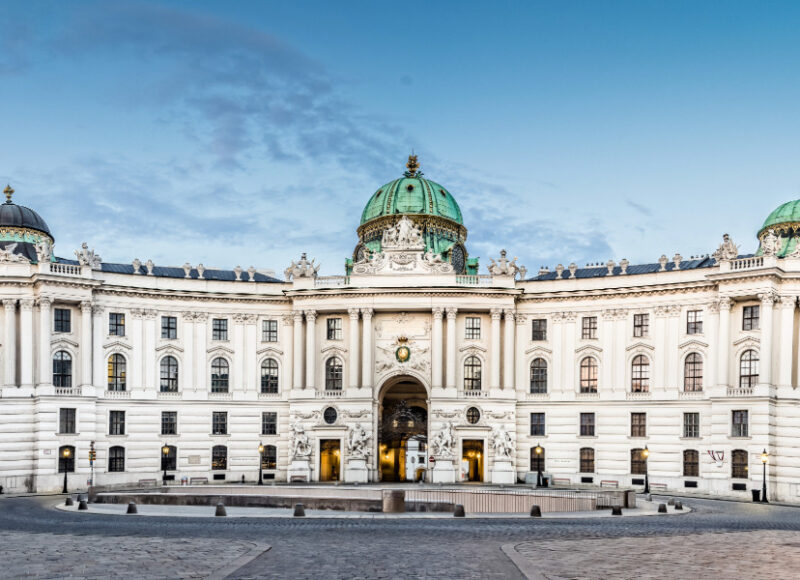
35th anniversary of the Charter of Paris for a New Europe Outcomes and Conclusions of the OSCE-Based Simulation Exercise Held on 21 November 2025 at the Vienna Hofburg
35th anniversary of the Charter of Paris for a New Europe Outcomes and Conclusions of the OSCE-Based Simulation Exercise Held on 21 November 2025 at the Vienna Hofburg
Report written by Fedor Agapov, Sophie Draeger & Julius Gruber
March 2026
Abstract (English)
This report presents the outcomes of the simulation marking the 35th anniversary of the 1990 Charter of Paris, held on November 21, 2025, at the Vienna Hofburg to reassess its principles in light of contemporary European security challenges. Bringing together secondary-school students representing OSCE participating States, the exercise examined tensions between sovereignty and collective action, with a particular focus on energy security, environmental governance, and emerging technologies. The negotiations revealed both persistent divisions—especially on institutional expansion and AI governance—and strong convergence on practical cooperation, infrastructure protection, and crisis prevention. The simulation demonstrated the continued relevance of the Paris Charter, not only as a political guiderail, but as a pedagogical framework and highlighted how multilateral diplomacy is shaped by enduring structural dilemmas in European security.
Abstract (Deutsch)
Dieses Summary präsentiert die Ergebnisse der Simulation anlässlich des 35-jährigen Jubiläums der Pariser Charta von 1990 vor, die vom 19. bis 21. November 2025 in der Wiener Hofburg stattfand, und deren Ziel es war, die Grundprinzipien der europäischen Sicherheitsordnung unter heutigen Bedingungen neu zu reflektieren. Schülerinnen und Schüler vertraten hierbei OSZE-Teilnehmerstaaten und verhandelten zentrale Felder gegenwärtiger europäischer Politik, zwischen staatlicher Souveränität und kollektiver Handlungsfähigkeit, insbesondere in den Bereichen Energiepolitik, Umwelt und neue Technologien. Die Debatten veranschaulichten sowohl deutliche Meinungsverschiedenheiten – etwa zur institutionellen Vertiefung der OSZE und zum Einsatz von Künstlicher Intelligenz – als auch breite Übereinstimmung in der europäischen Sicherheitspolitik. Die Simulation unterstreicht damit die anhaltende politische, wie auch pädagogische Relevanz der Pariser Charta für das Verständnis moderner europäischer Sicherheitspolitik.
Keywords: AI, Charter of Paris, Energy, Environment, OSCE.
Key Takeaways
1 The Paris Charter framework remains pedagogically powerful for understanding contemporary security dilemmas
The 35th anniversary simulation demonstrated that the 1990 Charter’s core tension—balancing state sovereignty with collective action on shared threats—remains central to European diplomacy in 2025. Students authentically grappled with the same trade-offs faced by policymakers of the time: whether to cede authority to new institutions and how to manage divergent national strategies while maintaining transnational cooperation. The Charter can also help face new challenges, such as the consideration of disruptive technologies such as AI.
2 Student debates revealed deep divisions on technology governance and environmental strategy
The sharpest disagreement among delegates focused on the integration of AI into environmental monitoring, because of their energy-intensiveness and counterproductivity to sustainability goals, despite their value for climate modelling.
3 Practical cooperation succeeded where institutional ambition failed
Students agreed on operational measures such as infrastructure protection and early-warning systems but rejected the proposed CLIMDATA environmental data-sharing agency. This pattern mirrored real-world European negotiations: comfort with tangible collaboration combined with skepticism towards new bureaucratic frameworks lacking clear mandates—a dynamic the students absorbed and reproduced with remarkable fidelity.
4 Model UN methodology successfully translates complex multilateral diplomacy for Youth audiences
The simulation’s planning process involved close collaboration between diplomatic advisers, academic experts, and pedagogical teams to adapt OSCE-style negotiations for high school participants. Through careful design and preparation, students successfully navigated procedural diplomacy, coalition-building, and substantive policy trade-offs, demonstrating that well-structured simulations can cultivate diplomatic literacy and a nuanced understanding of the European security architecture among the next generation.
5 Sovereignty remains the default position, even in simulated multilateral settings
The simulation revealed an instructive lesson: even young delegates instinctively gravitated towards protecting national prerogatives over harmonized approaches, suggesting that sovereignty-first thinking is deeply embedded in how international relations are taught and conceptualized, with implications for how future diplomats may approach collective challenges.
Signed on November 21, 1990, the Charter of Paris for a New Europe (also known as the Paris Charter) represented a landmark document that established the foundations of the post-1990 European order. Adopted at a moment of tremendous historical transition, the Charter of Paris symbolized the optimism that followed the collapse of ideological blocs and the peaceful resolution of the Cold War. Resting on the Helsinki Final Act, it articulated an ambitious vision of a Europe “whole and free,” grounded in shared values rather than balance-of-power logic. The Charter also affirmed the principle that security is indivisible—linking political, economic, and environmental stability. As former OSCE Secretary General Marc Perrin de Brichambaut (2005-2011) underlined, the Charter was not merely a declaratory document, but an attempt to transform the very grammar of European security from confrontation to cooperation, from deterrence to confidence-building, and from sovereignty defined against others to sovereignty exercised within a shared normative framework (Perrin de Brichambaut 2025).
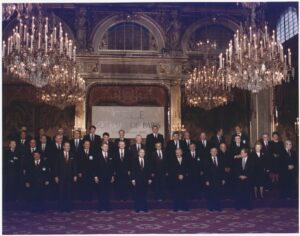
Source: David Valdez – U.S. National Archives and Records Administration, President Bush joins other world leaders during the Conference on Security and Cooperation in Europe for a group… – NARA – 186422.
Yet, the Charter’s ambition was in many instances also its vulnerability. The assumption that politics of compromise and equilibrium would naturally follow the end of bipolarity underestimated the resilience of geopolitical competition and the persistence of divergent historical experiences by major European security actors. While the Charter supported the institutionalization of dialogue, the absence of robust coercive mechanisms left its principles exposed when consensus eroded. The wars in former Yugoslavia, the gradual re-militarization of European security relations, and, after 2014, Russia’s violations of the Charter’s core commitments revealed the fragility of the post-1990 order that the Charter had initiated.
These realities should not be perceived as signals of the Charter’s obsoleteness. Thomas Greminger, former OSCE Secretary General (2017-2020), and Pierre Morel, former Ambassador of France to the Russian Federation (1992-1996) and EU’s special envoy, argue that its principles remain a crucial point of reference precisely because they define the ideal that could not be upheld by the post-Cold War architecture (Greminger 2025; Morel 2025). In an era of hybrid warfare, disinformation, and the challenge of novel technologies, the Charter’s holistic reading of security—linking political legitimacy, economic cooperation, environmental responsibility, and human rights—rallies us around our fundamental values. In 2026, the raging war of aggression in Ukraine, the return of geopolitical tensions, hybrid threats, and climate instability challenge the very foundations of European security laid out in 1990. At the same time, they further highlight the Charter’s relevance.
Revisiting the Paris Charter today thus serves a dual purpose. Historically, it reminds us of a moment when a cooperative security order for Europe seemed achievable. Politically, it provides a normative benchmark against which contemporary measures and conditions can, or even must be held. As Marc de Brichambaut underlined, the challenge is no longer to replicate the optimism of 1990, but to reinterpret its principles under far more adverse conditions. In this sense, the Charter remains less a relic of a bygone era than a demanding reference point. A reminder that European security, if it is to be sustainable, must once again reconcile sovereignty with cooperation, power with law, and national interests with a common equilibrium.
Revisiting the Charter in 2025 provides a lens through which to evaluate how states interpret sovereignty, environmental responsibility, and collective action in our time. The UN simulation at the Hofburg on 21st of November aimed to apply the Charter’s spirit and principles to contemporary realities, with a particular focus on energy security, environmental cooperation, and emerging technologies.
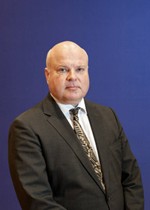
Source: Finnish Government, Ministry of Foreign Affairs, 2023, https://valtioneuvosto.fi/en/-/vesa-hakkinen-appointed-head-of-mission-of-permanent-representation-to-osce.
“At a time when the European security order is fracturing and new forms of autocracy are on the rise, the Paris Charter, with its remarkable optimism and its declaration of democracy and human rights as the only legitimate foundations of governance, serves as a reminder of our moral and political foundations. It also refers to the integrative nature of modern diplomacy—not merely as national service, but as the relational shaping of sustainable common futures.”
E. Ambassador Vesa Häkkinen, Permanent Representative of Finland to the OSCE
- The OSCE-Based Paris Charter Simulation
Organized at the initiative of the French Permanent Representation to the OSCE and opened by Ambassador Vesa Häkkinen, Permanent Representative of Finland to the OSCE and Chairman of the Permanent Council, the simulation brought together approximately 100 students from two secondary schools in Vienna: the Lycée Français de Vienne (LFV) and the Theresianum Gymnasium. Participants were assigned to represent around 25 delegations corresponding to OSCE participating States, with some delegations grouped to reflect diplomatic coordination practices. The exercise followed the institutional structure of the OSCE and was organized around its three dimensions of security – politico-military, economic and environmental, and human – each addressed in a separate commission.
The allocation of countries and roles was determined in advance by the organizing academic team and instructors, rather than chosen by students, in order to ensure balanced representation and effective debate. Within each delegation, students acted collectively as ambassadors, preparing position papers ahead of the simulation and designating spokespersons for formal interventions. Negotiations were conducted under the guidance of former OSCE Secretary General Marc Perrin de Brichambaut, who also was the Head of the French Delegation to the CSCE, Ambassador Christian Strohal, former Austrian Permanent Representative to the OSCE in Vienna and former Director of the OSCE ODIHR (Office for Democratic Institutions and Human Rights), and Mr Dominik Marxer, Deputy Head of the Permanent Mission of Liechtenstein in Vienna.
The negotiations focused on the second – economic and environmental – dimension of security. Three main themes were proposed to the students: the governance of new technologies, institutional design, and energy transition. The students also had to brainstorm on amending and adopting a revised text of the Paris Charter by consensus, defined as the absence of formal opposition.
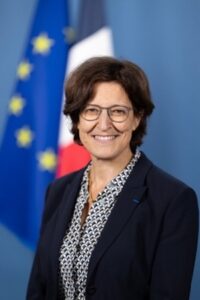
Source: Permanent Representation of France to the OSCE, 2023, https://osce.delegfrance.org/The-Ambassador
“The frequently cited ‘end of history’ prophesied by Francis Fukuyama at the end of the Cold War, did not simply fail: it never materialized in the first place. The collapse of Yugoslavia, the 2008 occupation of Abkhazia and South Ossetia, the occupation of Crimea in 2014, and the full-scale escalation of February 2022 therefore stand as tragic consecutive milestones of a European security order that was never sustainably realized. Assessing this reality demands dialogue, codified rights, and the reinvigoration of international law. Above all, it requires a new generation of diplomats capable of reinforcing the idealistic values of the Paris Charter as the foundation of shared European realities where the past thirty years have fallen short.”
E. Ambassador Fatène Benhabylès-Foeth, Permanent Representative of France to the OSCE
Overall Dynamics
The discussions reflected ongoing tensions between state sovereignty and collective environmental action – a core dilemma already present in the context of the 1990 Paris Charter. While state representatives, at the simulation, agreed on practical cooperation, such as infrastructure protection, joint inspections, and improvements to climate-related early-warning systems, they struggled when proposals required new institutional commitments (such as CLIMDATA, see below) or the adoption of emerging technologies (such as AI). These disagreements demonstrate how differently states assess the risks, costs, and strategic implications of centralizing environmental data or integrating digital tools into governance frameworks.
The simulation highlighted the broader challenge of updating the Paris Charter’s principles for 2025: cooperation remains essential in a world defined by shared climate risks and interconnected energy systems, yet consensus is increasingly difficult to achieve. Divergent national energy strategies, varying levels of technological readiness, and concerns over bureaucratic proliferation continue to limit ambitious collective action—especially in the areas of energy policy, environmental data management, and technological governance.
“Representing the Russian Federation in the Paris Charter simulation was, for me, a quite complicated exercise, as I am a Lithuanian citizen. In this context, trying to understand Russian interests was particularly difficult. My father, who was a Lithuanian ambassador and worked in Ukraine until 2019, helped me tremendously in this regard. As a Lithuanian, I was socialised into an understanding that there can be no empathy towards Russia’s aggressive policy. I thus found it hard to identify a justification as the simulation’s representative of the Russian Federation, despite my efforts. In this sense, I had to rely on unstable arguments that I found to be quite shallow—as behind these geopolitical threats, however abstract, there are people’s lives that matter.”
Simulation Representative of the Russian Federation
The divide over AI tools
Delegations debated the role of artificial intelligence in environmental monitoring and early-warning systems.
One of the sharpest disagreements during the simulation concerned a proposal to include AI tools in environmental monitoring and early-warning systems. While some delegations (Austria) viewed AI as a useful analytical tool, noting that it improves modelling, forecasting, and risk management, others (Germany, Switzerland) emphasized its environmental costs, regulatory uncertainty, and limited added value at the current stage, hence expressing reservation about the integration of AI technologies into climate monitoring and early-warning mechanisms. Attempts to find a compromise through the exclusion of generative AI failed.
Proposals concerning new institutional mechanisms revealed strong reservations. In particular, delegates debated a proposal to establish CLIMDATA, a centralized OSCE-level platform intended to harmonize environmental data collection, coordinate climate risk assessments, and facilitate cross-border responses to environmental threats. Although there was general support for cooperation and data sharing, many delegations (Austria, Switzerland) were reluctant to create new OSCE-level structures without clear justification and mandate, citing risks of duplication and bureaucratic expansion. Ultimately, no agreement was reached, and the CLIMDATA proposal was withdrawn. This outcome demonstrated a broader reluctance within Europe to create new institutions unless clear functional gaps are identified.
Energy transition strategies remained contested. While participants broadly agreed on the need to protect critical energy infrastructure and reduce environmental risks, they differed on the appropriate role of transitional fuels, particularly natural gas. Despite these disagreements, some proposals secured broad consensus: Liechtenstein’s proposal on energy sovereignty, reaffirming each state’s right to determine its own energy mix while safeguarding critical transnational infrastructure. It passed smoothly and without opposition. Italy advocated for the temporary inclusion of natural gas as a transition fuel, citing its comparatively lower environmental impact relative to coal and oil. This position contributed to a broader discussion on whether gas should remain part of the energy mix. The Chair concluded that member states hold “different views on whether natural gas should continue to feature in the energy mix”, reflecting the diversity of national strategies and levels of dependency.
Taken together, these themes structured the negotiations and highlighted the persistent tension between national sovereignty and collective action in the environmental and energy domain.

“Today’s simulation represents a crucial contribution to education for citizenship and peace, and it allows for the direct engagement of young people, demonstrating that youth has its place in building the future.”
Madame Sophie Maraux, Proviseure du Lycée Français de Vienne
A revised version of the Paris Charter
One of the main outcome of the simulation was the adoption of a jointly produced review of the Paris Charter, taking into account the significant developments that have occurred since 1990 across all three core dimensions.
Within the Politico-Military dimension, the territorial integrity and each participating state’s free choice of its security arrangements were re-emphasized as the foundation of a joint security architecture. Threats to critical infrastructure and disinformation emanating from the cyber domain, as well as innovative military technologies that could not have been anticipated in 1990, were introduced. The polmil delegates suggested to enhance the commitment by participating states to transparency regarding their military activities, especially in cases where participating states do not share the same institutional security arrangements; to this end, the introduction of a joint OSCE surveillance mechanism for military manoeuvres. Among the points of disagreement, delegates were unable to reach agreement on a proposed common protection regime for undersea cables.
Within the Economic and Environmental dimension, delegates emphasized economic freedom and environmental responsibility as a joint basis for effective development. The call for a commitment to prioritise rail over road infrastructure. They further committed on cooperation on joint emission-reduction mechanisms. They introduced a joint surveillance mechanism for the protection of critical infrastructure. However, delegates failed to agree on a status of nuclear energy production as sustainable.
Within the Human dimension, delegates assessed that the protection of journalists and the media is increasingly under threat. They noted that new threats arising in the digital sphere, social networks, and cyberspace are not accounted for in the original Paris Charter document. Equally, threat to electoral processes emerging from the digital sphere could not have been imagined in 1990, just like the risk of misinformation facilitated by AI technology. Delegates suggested to create a public register documenting cases of threats, assaults, and media harassment, contributing to an early-warning and rapid-monitoring system that organizes legal and financial support instruments. They introduced a structured cooperation on the root causes of migration, as well as measures to strengthen minority rights and identities and the use and availability of education in minority languages such as Sorbian, Basque, or Romani.

“Today’s simulation reminds me of the words of John F. Kennedy: ‘Ask not what your country can do for you—ask what you can do for your country.’ I hope that today’s simulation will prompt many of the young people with us to reflect on what they can do to help build a stable future order.”
HR Mag. Andreas Schatzl, Director of the Theresianum
Further reading:
- Thomas Greminger, “Charte de Paris : Ce n’est pas la fin de l’histoire”, Revue Défense Nationale, 2025/9, n° 884, pp. 24-31, https://www.defnat.com/e-RDN/vue-article.php?carticle=23812.
- Pierre Morel, “La Charte de Paris, 35 ans après : un manuel de survie”, Revue Défense Nationale, 2025/9 n° 884, pp. 10-23, https://www.defnat.com/sommaires/sommaire.php?cidrevue=884
- Christian Nünlist (dir.), “The Road to the Charter of Paris Historical Narratives and Lessons for the OSCE Today”, OSCE Network of Think Tanks and Academic Institutions, 2017, https://css.ethz.ch/content/dam/ethz/special-interest/gess/cis/center-for-securities-studies/pdfs/Nünlist-Aunesluoma-Zogg-20170612-Road%20to%20the%20Charter%20of%20Paris_final%20report.pdf
- Marc Perrin de Brichambaut, “The Charter of Paris in Perspective”, Security and Human Rights Monitor, 1 August 2025, https://www.shrmonitor.org/the-charter-of-paris-in-perspective/
- Guy Vinet, “La Charte de Paris : entre ambition excessive et espoir déçu pour la sécurité de l’Europe”, Revue Défense Nationale, 2025/9, n° 884 , pp. 7-9, https://shs.cairn.info/revue-revue-defense-nationale-2025-12-page-9?lang=fr.
Downloads