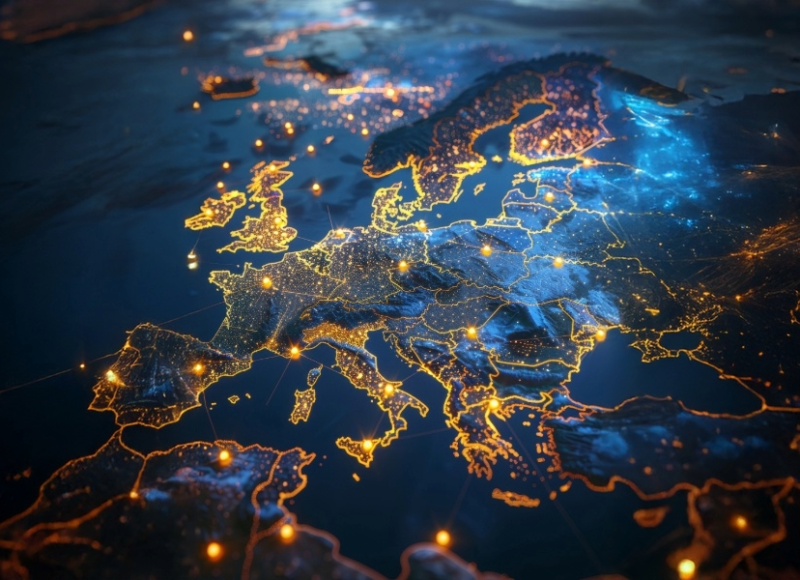
A new European Security Architecture
A new European Security Architecture


Policy Analysis 3/2026
By Marie Krpata & Loïc Simonet
“Today, now that the great storm has long since smashed it, we finally know that that world of security was naught but a castle of dreams.”
Stefan Zweig[1]
Keywords: European Security Architecture, NATO, OSCE, Russia, the United States
Executive Summary:
Russia’s war against Ukraine marks a historic turning point for Europe, fundamentally reshaping its security environment and exposing the fragility of the post–Cold War order. What was once envisioned as a peaceful, unified Euro-Atlantic space has given way to renewed geopolitical rivalry, division, and uncertainty. As a result, Europe is now divided into opposing blocs once again, with heightened unpredictability and strategic risk.
European security architecture—understood as the combination of institutions (EU, NATO, OSCE), legal frameworks, political norms, and bilateral or sub-regional arrangements—has been deeply affected. Russia’s aggression has accelerated major transformations within Europe, which is undergoing a profound shift toward greater strategic autonomy, marked by increased defense spending and efforts to reduce dependencies on external actors. Europe’s geopolitical center of gravity has moved towards its northeast, with countries like Poland and the Baltic states gaining prominence. New flexible coalitions and regional groupings are emerging, reshaping cooperation patterns beyond traditional institutional frameworks. Ukraine itself has become a central military and strategic actor, increasingly integrated into the European security system. Finally, key institutions such as NATO and the OSCE are under strain.
A sustainable post-war architecture will need to address several critical dimensions. A central challenge remains the role of Russia. Despite current hostilities, a stable European security system cannot be built without addressing Russia’s place within it. Equally important is the future of the transatlantic relationship. Growing divergence between the United States and Europe—particularly under shifting U.S. strategic priorities—has increased pressure on Europe to assume greater responsibility for its own defense, while still relying heavily on American capabilities.
Europe faces the urgent task of rethinking its security architecture in a rapidly changing and uncertain global context. Rather than creating an entirely new system, the priority should be to reinforce and effectively implement existing principles, while adapting them to new realities. Strategic reflection and proactive engagement are essential to ensure that Europe shapes its own security future, rather than having it imposed by external powers.
Key Findings:
- It is only during ‘critical junctures’ like the war in Ukraine and the deepening rift between the United States and Europe, that security architectures are likely to be fundamentally reconfigured.
- History shows us that ongoing hostility should not be an obstacle to thinking about the way to re-create the basis for peaceful coexistence in Europe.
- The impact of the war in Ukraine on Europe’s Security Architecture is already visible, from Europe’s quest for ‘strategic autonomy’, the shift of Europe’s center of gravity to its northeast, to the weakening of the ‘interlocking institutions’ that have been the spin of the post-Cold War security architecture.
- As Russia’s war against Ukraine is approaching a critical turning point, it is time to “look beyond the horizon”.
- A new “multidimensional” European Security Architecture should include security guarantees based on transparency and arms control; resolution of frozen conflicts in the region; discussion on nuclear deterrence; non-traditional security issues such as cybersecurity, disinformation, migration and energy flows; institutional aspects, such as the reactivation of the OSCE, and; a new EU enlargement and neighborhood policy.
- Above all, it should encompass a “lucid” definition of Europe’s long-term relationship with Russia, which is part of the European security system. Security in Europe needs to be built together with Russia, not against Russia.
- Today, the United States seeks to adapt, disrupt and, in some cases, reject the most essential tenets of the very system it helped to forge from the ashes of the Second World War. Europe’s once main guarantor of security is taking a divergent path, which necessarily has an impact on the stability of Europe’s security architecture. Safeguarding the Transatlantic bond should also be core to the future European Security Architecture.
- There is no need to reinvent the wheel. Rather than a completely new security order, what is needed is change of political perspective and clear rules of the game.
- Time is already running out. If Europe does not start thinking about the future of its security system right now, others will do so in its place. European actorness is key. “Pax Europeae” should be shaped and managed by Europe itself.
Zusammenfassung
Russlands Krieg gegen die Ukraine markiert einen historischen Wendepunkt für Europa, der seine Sicherheitsordnung grundlegend verändert und die Fragilität der Nachkriegsordnung nach dem Kalten Krieg offenlegt. Was einst als friedlicher, geeinter euro-
atlantischer Raum gedacht war, ist einer erneuten geopolitischen Rivalität, Spaltung und Unsicherheit gewichen. Infolgedessen ist Europa erneut in gegensätzliche Blöcke geteilt, begleitet von erhöhter Unvorhersehbarkeit und strategischem Risiko.
Die europäische Sicherheitsarchitektur – verstanden als Zusammenspiel von Institutionen (EU, NATO, OSZE), rechtlichen Rahmenbedingungen, politischen Normen sowie bilateralen oder subregionalen Vereinbarungen – ist tiefgreifend betroffen. Russlands Aggression hat weitreichende Veränderungen in Europa beschleunigt, das sich in einem tiefgreifenden Wandel hin zu größerer strategischer Autonomie befindet, gekennzeichnet durch steigende Verteidigungsausgaben und Bemühungen, Abhängigkeiten von externen Akteuren zu reduzieren. Der geopolitische Schwerpunkt Europas hat sich nach Nordosten verlagert, wobei Länder wie Polen und die baltischen Staaten an Bedeutung gewinnen. Neue flexible Koalitionen und regionale Zusammenschlüsse entstehen und verändern die Kooperationsmuster über traditionelle institutionelle Rahmen hinaus. Die Ukraine selbst ist zu einem zentralen militärischen und strategischen Akteur geworden und wird zunehmend in das europäische Sicherheitssystem integriert. Gleichzeitig stehen zentrale Institutionen wie NATO und OSZE unter Druck.
Eine nachhaltige Sicherheitsarchitektur nach dem Krieg wird mehrere entscheidende Dimensionen berücksichtigen müssen. Eine zentrale Herausforderung bleibt die Rolle Russlands. Trotz der aktuellen Feindseligkeiten kann ein stabiles europäisches Sicherheitssystem nicht aufgebaut werden, ohne Russlands Platz darin zu klären. Ebenso wichtig ist die Zukunft der transatlantischen Beziehungen. Wachsende Differenzen zwischen den Vereinigten Staaten und Europa – insbesondere vor dem Hintergrund sich wandelnder strategischer Prioritäten der USA – erhöhen den Druck auf Europa, mehr Verantwortung für seine eigene Verteidigung zu übernehmen, während es weiterhin stark auf amerikanische Fähigkeiten angewiesen ist.
Europa steht vor der dringenden Aufgabe, seine Sicherheitsarchitektur in einem sich rasch wandelnden und unsicheren globalen Kontext neu zu denken. Anstatt ein völlig neues System zu schaffen, sollte der Schwerpunkt darauf liegen, bestehende Prinzipien zu stärken und wirksam umzusetzen sowie sie an neue Realitäten anzupassen. Strategische Reflexion und proaktives Handeln sind entscheidend, damit Europa seine sicherheitspolitische Zukunft selbst gestaltet, anstatt sie von externen Mächten bestimmen zu lassen.
Zentrale Erkenntnisse:
- Nur in „kritischen Junkturen“ wie dem Krieg in der Ukraine und der sich vertiefenden Kluft zwischen den Vereinigten Staaten und Europa ist mit einer grundlegenden Neugestaltung von Sicherheitsarchitekturen zu rechnen.
- Die Geschichte zeigt, dass anhaltende Feindseligkeiten kein Hindernis dafür sein sollten, über Wege nachzudenken, die Grundlagen für ein friedliches Zusammenleben in Europa neu zu schaffen.
- Die Auswirkungen des Krieges in der Ukraine auf die europäische Sicherheitsarchitektur sind bereits sichtbar – von Europas Streben nach „strategischer Autonomie“ über die Verschiebung des geopolitischen Schwerpunkts nach Nordosten bis hin zur Schwächung der „ineinandergreifenden Institutionen“, die das Rückgrat der Sicherheitsordnung nach dem Kalten Krieg gebildet haben.
- Da sich Russlands Krieg gegen die Ukraine einem kritischen Wendepunkt nähert, ist es an der Zeit, „über den Horizont hinauszublicken“.
- Eine neue „mehrdimensionale“ europäische Sicherheitsarchitektur sollte Sicherheitsgarantien auf der Grundlage von Transparenz und Rüstungskontrolle umfassen; die Lösung eingefrorener Konflikte in der Region; eine Diskussion über nukleare Abschreckung; nicht-traditionelle Sicherheitsfragen wie Cybersicherheit, Desinformation, Migration und Energieflüsse; institutionelle Aspekte wie die Reaktivierung der OSZE sowie eine neue EU-Erweiterungs- und Nachbarschaftspolitik.
- Vor allem sollte sie eine „nüchterne“ Definition der langfristigen Beziehungen Europas zu Russland beinhalten, das Teil des europäischen Sicherheitssystems ist. Sicherheit in Europa muss gemeinsam mit Russland aufgebaut werden, nicht gegen Russland.
- Die Vereinigten Staaten sind heute bestrebt, die zentralen Grundsätze jenes Systems anzupassen, zu verändern oder teilweise sogar abzulehnen, das sie selbst nach dem Zweiten Weltkrieg mit aufgebaut haben. Europas einstiger Hauptgarant für Sicherheit schlägt einen divergierenden Kurs ein, was zwangsläufig Auswirkungen auf die Stabilität der europäischen Sicherheitsarchitektur hat. Die Sicherung der transatlantischen Bindung sollte daher ebenfalls ein zentrales Element einer zukünftigen europäischen Sicherheitsarchitektur sein.
- Es besteht keine Notwendigkeit, das Rad neu zu erfinden. Statt einer völlig neuen Sicherheitsordnung bedarf es vielmehr eines Perspektivwechsels und klarer Spielregeln.
- Die Zeit drängt. Wenn Europa nicht jetzt beginnt, über die Zukunft seines Sicherheitssystems nachzudenken, werden andere dies an seiner Stelle tun. Europäische Handlungsfähigkeit ist entscheidend. Eine „Pax Europaea“ sollte von Europa selbst gestaltet und getragen werden.
Introduction
The war in Ukraine, the culmination of a decade of Russian destabilization since 2014, has become a game changer for Europe, a Zeitenwende (“turning point”, “change of era”), as former German Chancellor Olaf Scholz coined it (Scholz 2022). A “never so prosperous, so secure nor so free” Europe (Solana 2003) has become a Europe “under strain, siege and even threat” (Bildt 2015, 3). The “new era of democracy, peace and unity” foreseen in the Charter of Paris for a New Europe (1990) has turned into a “not at peace” Euro-Atlantic area (NATO 2022 Strategic Concept, 6).
It is almost 37 years since the division of Europe into two antagonistic power blocs was consigned to history, but “we failed to provide a European response, or to organize an architecture to protect ourselves, via the OSCE or the other projects envisaged at the time”, French President Emmanuel Macron observed at the 2023 Globsec Forum in Bratislava (Macron 2023). NATO’s enlargement towards the East in 1999 and 2004, the Rose and Orange revolutions in 2004/05 followed by the Maidan uprising in 2014, Vladimir Putin’s speech at the Munich Security Conference in 2007 where the Russian President provided a list of grievances and ‘red lines’, NATO’s imprudent summit declaration in Bucharest in 2008, where it was declared that both Ukraine and Georgia would join the Alliance at some point, were all steps towards the current stalemate. “The vision of a free, democratic, common and indivisible Euro-Atlantic and Eurasian security community stretching from Vancouver to Vladivostok, rooted in agreed principles, shared commitments and common goals”, set forth at the Astana summit of the OSCE in 2010, has turned to an illusion. Just as during the Cold War, the Old Continent is once again divided between two hostile camps. The current security situation in Europe is even seen as more unpredictable and uncertain than in the final years of the Cold War (Sarotte 2022).
Ondřej Ditrych and Martin Laryš, from the Prague Institute of International Relations, observe that the notion of “security architecture” surfaces more saliently at times of rupture when the existing order is “dismantled”, “overturned” (Ditrych & Laryš 2025, 45). Indeed, we are going through what Zbigniew Brzezinski called a “global turmoil” (Brzezinski 1993), a time characterized by a high degree of uncertainty, risk, and ontological insecurity, an “age of fracture” (Rodgers 2012), an “emergency time” (Chakrabarty 2021) where the accelerating concatenation of wars, alliance shift, democratic erosion, and weakening of values exposes the fragility of our system. It is only during such ‘critical junctures’ that security architectures are likely to be fundamentally reconfigured (Hyde-Price 2014, 105). The war in Ukraine is already listed as such a turning point in history. ln addition to continuing efforts to support Ukraine and stabilize the situation on the battlefield, the time seems ripe for an in-depth assessment of Europe’s security regime. “The vision of a ‘common European home’ may be more remote today than it appeared two decades ago, but we still occupy a common space and need to find ways of living together in it”, the Panel of Eminent Persons on European Security as a Common Project assessed in 2015 (Panel of Eminent Persons 2015, 12).
In 2026, the European Security Architecture has become a ‘toxic’ topic, though. When Ignazio Cassis, Head of the Swiss Federal Department of Foreign Affairs and current Chairman of the OSCE, evoked the necessity of discussion about the security architecture of Europe "on the long term", during the press conference following his visit to Moscow on 7 February 2026, he puzzled many of his peers. Some sceptics wonder if this is the right time for such an undertaking. Many argue that it makes little sense to discuss architecture while the house is burning; it could even give a false feeling of “business as usual”. Certainly, it is difficult to envisage new negotiations in the present political climate, and without a clear vision of the outcome of the conflict. But that does not mean we should do nothing. In a phase of new insecurity and unpredictability in Europe, what we can and should do already now, is to invest thinking on how we can re-establish stability in Europe, achieve more security for all of us, starting with exploratory discussions, brainstorming and the generation of (new) ideas.
History shows us that ongoing hostility should not be an obstacle to thinking about the next step. In August 1941, several months before the official American entrance into the Second World War, U.S. President Franklin D. Roosevelt met with British Prime Minister Winston Churchill off the coast of Newfoundland. Together they issued the Atlantic Charter, which, among other things, committed their countries to the creation of a “wider and permanent system of general security.” Thus, from the moment the United States entered the war, its government was committed to the creation of a postwar international organization (Mackenzie 2010, 37). Similarly, during the Cold War, European countries were able to progress in building a common security architecture through dialogues and negotiations. It was less than a year after the brutal military suppression of the Prague Spring by the Warsaw Pact in 1968, that the Finnish Government called upon all European States and also the United States and Canada to make their position known regarding the idea of holding an all-embracing conference on European security. After five years of discussion, the Helsinki Final Act, the “Magna Carta of détente,” was signed (Fischer 2009 a & b). As Christian Nünlist highlighted, “If it was possible to create the basis for peaceful coexistence in Europe in a cumbersome, multilateral negotiation marathon during the Cold War, this should also be possible in the 21st century – despite, or precisely because of, the currently difficult conditions.” (Nünlist 2017, 14).
In 2026, Russia’s war against Ukraine is approaching a critical turning point and Europe must prepare for multiple possible post-war outcomes (Simonet 2026). In addition to continuing efforts to stabilize the situation in Ukraine, it is time to “look beyond the horizon”. Increasing military expenditures cannot be the only option. Though premature at this time, the difficult process of rebuilding trust will have to begin.
This paper will start defining European Security Architecture and the different elements it encompasses. Then it will analyze more into details the consequences of Russia’s war of aggression against Ukraine on the post-Cold War architecture. Finally, it will delve into what a new ‘post-war’ European Security Architecture would need to address.
- What is the European Security Architecture?
How we should understand and conceptualize the European Security Architecture is a recurring item on the margin of international summits or for passionate academic discussion. However, there is no single definition of ‘security architecture’. European Security Architecture has always been multifaceted and diverse, combining and layering different components in ways that have evolved over time. These complex balances have been interpreted and perceived differently by each of the stakeholders involved. As a result, a single reality has given rise to differing interpretations, which has fueled political debates.
According to William Tow and Brendan Taylor, ‘security architecture’ is usually defined as “an overarching, coherent and comprehensive security structure for a geographically defined area, which facilitates the resolution of that region’s policy concerns and achieves its security objectives” (Tow & Taylor 2010, 96). It defines a complex of states whose national security interests cannot realistically be conceived separately. Applied to the Euro-Atlantic / Eurasian region, this definition encompasses several additional layers.
First, the European Security Architecture relies on a network of complementary, interlocking and mutually reinforcing European Security Institutions (Peters 2003) that include European and transatlantic organizations, multilateral undertakings and various forms of regional and subregional co-operation. Constructed around the twin pillars of the Euro-Atlantic community – NATO (the framework of the U.S. security guarantee) and the European Union – Europe’s security architecture has been shaped primarily, if not exclusively, by the relationship between these two key institutional pillars and, to a lesser extent, the OSCE and the Council of Europe – also encompassing Turkey, and previously Russia -, at Europe’s center of gravity and with overlapping membership. So far, discussion on European Security Architecture has mostly focused on institutional changes of and competition and cooperation between these institutions (Simonet 2017). One of these organizations, the OSCE, marks the geographical limits of the European Security Architecture: the Euro-Atlantic and Eurasian security community stretching from Vancouver to Vladivostok.
Second, a series of normative instruments and legal commitments such as the Helsinki Final Act and its so-called “Decalogue”, the Charter of Paris and the Helsinki Document 1992, as well as the subsequent OSCE/CSCE acquis, NATO’s Article V, the EU mutual assistance clause of Art. 42.7 of the Treaty on the EU, and arms control regimes (the defunct Conventional Armed Forces in Europe and Open Skies treaties which form, together with the Vienna Document, the web of interlocking and mutually reinforcing arms control agreements in the 1996 Lisbon Framework for Arms Control[2]). The famous 1994 Budapest Memorandum, that Russia violated by annexing Crimea and invading Ukraine, belongs to this second category.[3]
Third, what Elie Perot calls “politics,” meaning political constraints, core values and principles, as well as engrained and recurrent patterns of behavior of the participating states (Perot 2019). The European Security Architecture relies on shared commitments to democracy, human rights, rule of law, peace and security, and mutual respect. This third element also includes non-legally binding confidence and security building regimes such as the Vienna Document. Michael Rühle and Nick Williams refer to these mutually reinforcing principles and political processes as the “invisible” security architecture (Rühle & Williams 1998).
Fourth, bi- or ‘minilateral’ relations. This category encompasses, inter alia: the instruments governing the relationship between NATO and the Russian Federation – the 1997 “Founding Act on Mutual Relations, Cooperation and Security between NATO and the Russian Federation” and the NATO-Russia Council, both suspended -; the 2010 Lancaster House Treaty between France and the United Kingdom,[4] the 2025 Security and Defence Partnership between the European Union and the UK,[5] the treaty on enhanced cooperation and friendship signed between France and Poland in Nancy on May 9, 2025,[6] the Agreement on Enhanced Co-operation on Security, Defence, and Resilience between the Government of the Federal Republic of Germany and the Government of the Italian Republic (2026),[7] and the several sub-regional political ‘alliances’ such as the Nordic-Baltic 8[8] and the Visegrád 4. The Joint Expeditionary Force (JEF), a coalition of ten like-minded nations (Denmark, Estonia, Finland, Iceland, Latvia, Lithuania, the Netherlands, Norway, Sweden, the UK), comprising high readiness forces configured to respond rapidly to crises and partnering with Ukraine, should also be mentioned.[9]
Several objectives can be assigned to the European Security Architecture.
First, the European Security Architecture should guarantee stability and predictability to its participants, hence limiting the vulnerabilities of their security systems. Its central purpose is to prevent war as well as dangerous and aggressive military postures – and the need for states to anticipate and counter them. The European Security Architecture creates a sense of being part of a common security community (Hyde-Price 2014, 109). This is why arms control regimes, transparency and predictability measures, and Confidence- and Security-Building Measures (CSBMs) are core to the architecture.
Second, the European Security Architecture should be resilient against shocks, threats and disruptions.
Third, it should be inclusive, covering all the actors that are parts in the security system. Since the end of the Cold War, security trends in Europe have been dominated by the “pan-European question”; that is, how to build and maintain a security system involving all countries of Greater Europe, including Russia and the other successor states of the Soviet Union.
Fourth, it should spread peace and stability beyond its geographical limits. It should “foster a peaceful and benign external security environment and export security into the near neighborhood, both through the provision of economic and political aid, but also through peace support operations and military crisis management” (Hyde-Price 2014, 109).
The European Security Architecture remains a blueprint, an ideal, and aspiration that can only be incompletely fulfilled (Ditrych & Laryš 2025, 45) and that is constantly confronted with the realpolitik that shapes and determines Europe’s security environment.
A distinction is often made between ‘security architecture’ and ‘security order’. The architecture would concern the institutional settings (e.g. EU, NATO, OSCE), including their component parts and internal functioning. The security order would pertain to the normative framework, that is, a set of rules and principles in which the institutions are embedded, such as the inviolability of borders and the sovereign equality of states (Marangé & Stewart 2025, 7). In our opinion, this distinction is somehow artificial, in the sense that both elements – the institutional setting and the rules and principles – concur to the same objective: the security of those states that come together under this ‘umbrella’. Therefore, we will not rely on it and will stick to the concept of ‘architecture’.
- Russia’s war of aggression as a game changer
Between the condemnation of the threat or use of force against the territorial integrity or political independence of any State in the Helsinki Final Act; the freedom of States to choose their own security arrangements; and Ukraine’s right to exist and its sovereignty (Putin 2021), there is almost no aspect of the post-Cold War order that the Russian aggression has not shattered.
Preparing for the postwar period means influencing the outcome of this war and determining the conditions under which it will end. The outcome of the conflict, as well as the terms and conditions of a ceasefire, will be crucial for the future of the European Security Architecture. A humiliating defeat for Ukraine, on terms dictated by Russia and the United States, would inflict a psychological blow on the West and further marginalize the EU, jeopardize Ukraine’s future and its European integration process, embolden Putin and put Moscow in a position to dictate the terms of Russia’s reintegration into the European order. A frozen conflict or a hasty and ill-conceived cessation of hostilities under U.S. auspices would create a long-term source of tension on Europe’s Eastern flank, preventing both the overhaul of the European Security Architecture on a sound footing and the establishment, in the medium term, of a relationship based on compromise with Russia. The impact of the conflict on the European Security Architecture is already visible.
2.1 EU’s quest for strategic autonomy
The war in Ukraine, combined with the U.S. “America First” approach (US National Security Strategy 2025), has fundamentally affected the EU’s mindset. Europe is becoming aware of its dependencies, whether on Russia (natural gas), the United States (weapons) or China as a supplier or export market. After decades of ‘non-Europe’ and underinvestment in its military capabilities, Europe tries to catch up on the military front. The “era of rearmament” announced by EU Commission President Von der Leyen (Von der Leyen 2025), as well as the ReArm Europe plan and the White Paper for European Defence – Readiness 2030 adopted in March 2025, certainly boost Europe’s strategic autonomy,[10] “the second pillar of the New European Architecture”, according to Maroš Šefčovič, EU Commissioner and Vice-President of the Commission until 2024 – resilience being the first (Šefčovič 2022, 60). But it is quite a change in EU’s DNA. The EU is not a military power. It has always prided itself on its soft power.
At the NATO Summit in the Hague in June 2025, NATO allies committed to spending targets of 5 % of the allied states’ GDP by 2035 (Draeger & Simonet 2025). The economic impact for the Europeans will be stark, with part of their budget to be directed toward military expenditures, which bears the risk of a self-inflicted economic and social crisis. This could fundamentally transform European societies—turning them into societies where military buildup is prioritized over social justice and economic stability. The European Central Bank considers that “To achieve the new target for annual defence spending (5% of GDP by 2035) the EU would need to secure approximately €320 billion in additional public funding per year on average” (Bouabdallah et al. 2025).
In this context, Germany is becoming an unavoidable actor in European defense. Berlin got rid of the constitutionally anchored debt brake (Schuldenbremse) in March 2025 to ease expenses in defense. Berlin intends to treble its defense spending by 2029 to reach 160 bn EUR. It intends to meet the Hague spending targets, six years earlier than other allied countries (Tyborski et al. 2025; Buchsteiner & Lunday 2025) and to bring its armed forces from currently 180 000 to 460 000 by 2035 (260 000 soldiers and 200 000 reservists). While the rest of Germany’s economy is ailing, the defense industry is booming, symbolized by a Rheinmetall in full swing (Specht & Schimroszik 2026). Also, the Federal Republic of Germany released its first ever military strategy in April 2026 evidencing its ambition to become Europe’s biggest conventional army and taking on more responsibility (German Defense Ministry 2026).
The reinforcement of the “European pillar” within NATO will bear three consequences. It strengthens NATO so long as America remains, shows that Europe is committed to share the burden of collective defense and, if necessary, lays the groundwork in case of a future transatlantic rupture (The Economist 2024) (see hereafter).
2.2 A new center of gravity
Geographically, the war shifted Europe’s center of gravity to the Europe’s northeast. The historic decision to endorse two new countries’ membership application significantly recalibrated NATO’s posture in Northern and North-Eastern Europe (Dinicu 2022). Finland and Sweden’s accession provided the Atlantic Alliance with a new strategic depth, expanding the Supreme Allied Commander Europe’s (SACEUR) land area of operations by over 866,000 square kilometres. The Baltic States, until now geographically connected to the rest of the Alliance through the Suwalki corridor between Kaliningrad and Belarus, are now protected by their big Northern neighbors. NATO covers all the North of Europe, from Finland to Iceland. The Baltic Sea de facto became a NATO lake (Kojala & Kulys 2022), further isolating the Kaliningrad exclave from the Russian mainland and Saint Petersburg. With newly unlocking opportunities for shipping routes, natural resource exploitation and economic development in the Arctic created by climate change, NATO’s expansion to the North is everything but insignificant (Buchanan 2022). This reinforcement of NATO’s northern and northeastern flanks is also well materialized by the abovementioned Joint Expeditionary Force (JEF).
Eastern and Northeastern European countries, which have long been warning of a Russian threat, have been proven right. Poland’s economic growth, regional leadership and defence role cemented its position as a major force in Europe’s power structure (Surwillo & Slakaityte 2024). Its budget for 2026 raises defence spending to 4.8% of GDP (around 200 billion zlotys – 46 billion euros), the highest level in NATO (Militär Aktuell 2025). Together with the Baltic States, Poland is at the frontline, plagued by Moscow’s hybrid war (Sierakowski 2025). New faces emerged in Northern Europe – Finnish former Prime Minister Sanna Marin (2019-2023), Swedish Prime Minister Magdalena Andersson (2021-2022), current EU High-Representative for Foreign Affairs and Security Policy Kaja Kallas, the new EU Commissioner for Defence and Space Andrius Kubilius from Lithuania -, contrasting with the hesitation of the Franco-German ‘couple’ (Boffey & Oltermann 2022), EU’s traditional anchor, and Keir Starmer’s political difficulties in the UK. Without referring to a surge of “Nordism” or “Borealism,” the Nordic states emerge as a political force (Fägersten 2020).
2.3 Emerging pan-European alignments
Elsewhere in Europe, new centers of power are emerging. New ‘coalitions of the willing’ or “supra-governmental avantgardes” (Riekeles 2025; Zuleeg, Möller & Emmanouilidis 2024) emerge across old rifts, such as Brexit-related divisions or rivalries between the EU and NATO. That is the case of the ambitious – but somehow unrealistic and, in our opinion, very difficult to implement – Multinational Force Ukraine (MFU) that France and the United Kingdom supervise with the aim to support the implementation of a full or partial ceasefire in Ukraine and deploy ‘reassurance forces’. Among the positive side-effects of Trump’s return is the end of the acute phase of tensions between the UK and the EU and the start of a new phase of fruitful collaboration. Although the Labour government has no plans to revisit Brexit, London could commit to a ‘reset’ of its relationship with the 27, as Prime Minister Starmer called it (Frennhoff Larsén 2025) and shows greater willingness and flexibility. A new pan-European collaboration extended to the UK, Norway and Iceland, and a common European defense market at 30+ would be the natural outcome of the process which has begun and could bring more security to Europe (Letta, 2025).
This could lead to the formation of subregional groups for enhanced security cooperation. The Scandinavian and Baltic group focused on the residual Russian threat; a Central European group centered on Germany and Poland, possessing significant conventional capabilities, including the countries of Central and Eastern Europe—such as Ukraine, which is also oriented toward Russia; a predominantly Mediterranean group concerned with the Middle East, the southern shore of the Mediterranean, and Africa; and, as a backdrop, the new concept of “forward deterrence” presented by France (Fayet 2026), the only remaining nuclear power within the EU, having advantage over the UK which is dependent on the US for its nuclear missiles and software. Pan-European regional alignments as a flexible approach to security could allow for greater adaptability and responsiveness to the many challenges to European security. But it could be detrimental to European cohesion and to a common threat assessment.
2.4 Ukraine’s ‘steel porcupine’
From an ‘in-between’ country at EU’s periphery, as the Panel of Eminent Persons on European Security as a Common Project coined them in 2015, Ukraine has turned into a formidable and highly innovative ‘steel porcupine’ which is, in effect, already part of the NATO/EU security system (Lippert 2025). The country is now in the position to export its expertise and lessons learned. European countries’ request for support to counter attacks by Iranian drones against their forces based in the Middle East and Gulf region confirmed that not only does Ukraine need Europe, but Europe also needs Ukraine (Stewart 2025). It is in Europe’s interest to bring Europe’s best army into its security and defense system. Although Ukraine’s entry into the EU in January 2027, as envisaged in one of the last U.S. plans to end the war with Russia (Foy, Miller & Seddon 2025), seems rather unrealistic and fraught with worries from an EU point of view, Kyiv is striving toward this perspective to grow closer to the “European family”, especially since the prospects of Ukraine’s entry into the Atlantic Alliance have been buried by the Trump administration.
2.5 A fragilized institutional framework
In addition to reshaping the EU’s mindset, Russia’s war of aggression against Ukraine severely affected two of the European Security Architecture’s pillar organizations: NATO and the OSCE.
Putin’s war of aggression against Ukraine has initially reinvigorated the Atlantic alliance. In the lead-up to this war and since the outbreak of hostilities, NATO has undertaken the largest reinforcement of its deterrence and defense since the end of the Cold War and has confirmed its role as the main actor in collective defense in Europe. Two neutral states, Finland and Sweden, decided to join the Alliance. The long-overdue NATO’s new Strategic Concept adopted at the Madrid Summit in June 2022 was shaped by the war in Ukraine (Simonet 2023). However, Donald Trump’s return to the White House in 2025 has again plunged NATO into a precarious era. The 47th President of the United States has been a long-time critic of the U.S.’s NATO partners and said he would not defend those that fail to meet defense spending targets, directly challenging the alliance’s principle of collective defense. He has accused European countries of failing to contribute their fair share to the Alliance’s defense needs, and his administration has signaled that its strategic focus is shifting from Europe to the Indo-Pacific region. The NATO summit in The Hague in June 2025 only granted the organization a reprieve but could not dispel ambiguity nor completely restore NATO’s credibility (Draeger & Simonet 2025).
The OSCE emerged in a greatly diminished form from a decade of turmoil in Ukraine, which started in 2014 with Russia’s annexation of Crimea. Russia’s full-scale invasion of Ukraine has been the “most severe test (it) has faced since creation” (DiCarlo 2022). The Vienna organization is engaging in a fight for survival. Despite of the dedication of the Swiss chairmanship which managed to have the annual budget for 2026 adopted, breaking a five-year impasse (Liechtenstein 2026), frustration is currently widespread, reflecting the organization’s inability to uphold its key principles and commitments and to restore trust between its participating states. The long-awaited ‘Helsinki+50’ anniversary was commemorated in 2025 with neither fanfare nor celebration (Perrin de Brichambaut & Simonet 2025). Would the OSCE miss the ‘momentum’ towards conflict settlement in Ukraine and be sidelined, it would probably vanish from the radar screen (Kininmont & Simonet 2025).
- What a new ‘post-war’ European Security Architecture should include
"A comprehensive settlement, a long-term and viable settlement is impossible without a comprehensive consideration of security issues on the continent," Kremlin Spokesman Dmitry Peskov said in the margins of the talks between Marco Rubio and Sergey Lavrov in Riyadh, on 18 February 2025 (TASS 2025). Only stabilizing the accomplishments of the past four decades and defending them against revisionist Russia might not be sufficient. How to go beyond the status quo without however compromising the existing principles and commitments that form the bedrock of the current European Security Architecture, starting with the Helsinki “Decalogue”?
In his call for a new European security architecture, Pierre Vimont, former Executive Secretary-General of the European External Action Service (EEAS) from 2010 until 2015 and senior fellow at Carnegie Europe, offered the constitutive elements of a new “multidimensional” European Security Architecture (Vimont 2024, 3-4):
- Security guarantees based on transparency and arms control
Conventional arms control has played a historic role in ensuring the security of Europe and the broader Euro-Atlantic region. However, nearly three decades after the signing of the Treaty on Conventional Armed Forces in Europe (CFE), the European conventional arms control regime is moribund. A new security architecture could restore a tailor-made regime aiming to ensure military stability, through limitations, predictability and transparency; based on “qualitative” mechanisms – rather than “quantitative”; it should encompass a new generation of arms, such as unmanned aerial vehicles (UAVs)/drones and the use of artificial intelligence and robotics which have a considerable influence on the conflict in Ukraine.
- Resolution of frozen conflicts in the region
“Frozen” / protracted conflicts in Eastern Europe and the Caucasus, as well as stability in the Western Balkans, need to receive full attention. Territorial disputes, the status of minorities, as well as other wounds left open on the European continent, need to be addressed. Universalism should be emphasized over irredentism and ethnonationalism which may be instrumentalized by countries like Russia through proxies.
- Discussion on nuclear deterrence:
As declining trust in the U.S. is now spreading across Europe, a nuclear deterrence complementary to the American nuclear umbrella is increasingly regarded by European states as an additional security guarantee, including in ‘nuclear-skeptic’ Germany (Flottau, Föderl-Schmid & Ismar 2026). The new concept of “forward deterrence” presented by France encompasses “the operational integration of allies’ conventional capabilities in the French nuclear deterrent mission, as well as political familiarity and strategic literacy” (Fayet 2026).
- Non-traditional security issues such as cybersecurity, disinformation, migration and energy flows
A future security architecture also needs to manage the risks of hybrid warfare, as well as the attacks on critical infrastructures such as transport, energy or telecommunication infrastructures.
- Institutional aspects, such as the reactivation of the OSCE
How to rejuvenize the concept of “interlocking institutions” which blossomed after the end of the Cold War? Which existing organization could act as an “umbrella” for discussion on the future European Security Architecture? NATO and the EU, the two most obviously relevant institutional frameworks for a post-war Ukraine, are largely unavailable for that purpose. The OSCE still has a few institutional assets and key comparative advantages framework for pan-European discussion. The Vienna organization, crippled in Ukraine, could take on a crucial role when it comes to rebuilding the country after the war. But, before embarking on a fresh discussion of the European security architecture, it must restore a sufficient level of internal consensus, cohesion and co‑operation. Will the European Political Community (EPC), an intergovernmental forum for political and strategic discussions about the future of Europe established in 2022 after the Russian invasion of Ukraine, become the new modern? The EPC mirrors the CSCE’s format and even occupies a similar discursive space. Diplomats have described it as an “OSCE without Russia” (Brzozowski 2022), a kind of successor to the OSCE (Kozioł & Maślanka 2022) or even its “potential competitor” (Jones 2023). Formats such as the EPC might become appealing for an OSCE-sceptic U.S. administration.
- A new EU enlargement and neighborhood policy:
The EU’s enlargement has become geopolitical and security driven. New applicants (Ukraine, Moldova) should not be granted a fast track over “long-time applicants” (the Western Balkans) as the process should be merit-based. But questions remain: How to absorb a war-wracked country? How to include an agricultural heavyweight like Ukraine? How to keep EU institutions efficient with a higher number of Member States? Cooperation with countries like Armenia, Azerbaijan and Belarus would also need to be reconsidered in light of the definition of a new European Security Architecture.
- A “lucid” definition of the type of cooperation Europe wants to propose to Russia.
This study will now examine this last aspect of the relationship with Russia in greater depth. It will also focus on an issue whose dramatic evolution Ambassador Vimont was unable to fully appreciate in 2024: the future of the transatlantic relationship. The vision of Halford Mackinder today needs to be revisited: is it still possible to include the “European Coastland”, Russia’s huge “Heartland” and America’s “outlying island” (Mackinder 1904 & 1919; Gilbert 2025) into one single security community?
3.1 An inclusive European security order that can encompass Russia
The place and role of Russia within Europe’s security architecture has always been a critical issue. Russia’s aspiration to be a part of Europe is age-old. Adam Rotfeld recalls that Russia has a long record of promoting comprehensive security concepts for Europe, from the 1803 memorandum of Duke Adam Jerzy Czartoryski, Tsar Alexander I’s Minister of Foreign Affairs to Maxim Litvinov’s, the then Soviet Commissar for Foreign Affairs, 1936 Collective Security Concept, up to President Medvedev’s proposal of a new European Security Treaty in 2009 (Rotfeld 2009). “The definition of what constitutes contemporary Europe in terms of military security has always struggled to accommodate Russia” (Chappell, Galbreath & Mawdsley 2019, 2). For more than a decade, Russia has been advocating for a redefinition of Europe’s security architecture, including through parallel and non ‘NATO-centric’ fora such as the Commonwealth of Independent States (CIS) and the Collective Security Treaty Organization (CSTO). In his famous speech at the 2007 Munich Security Conference Vladimir Putin said: “I am convinced that we have reached that decisive moment when we must seriously think about the architecture of global security.”
Russia is part of the European security system – regardless of whether its influence on European security is considered negative or positive – (Anghel & Damen 2025, 2). It is not going away. It will remain our geographical neighbour. The Russian Federation will most probably continue to exist as it is. Expecting its defeat, its transformation and even its fragmentation, as some commentators proclaimed after the invasion of Ukraine (Panych 2022), is a dangerous illusion. There can be no comfort for other countries and no settled peace while Russia is in confrontation with Europe. Ondřej Ditrych and Martin Laryš rightly underline that a security architecture “is not built against an actor (such as Russia) to balance outside threats this actor poses, in which case it is rather an institutionalisation of the alliance” (Ditrych & Laryš 2025, 46). Security in Europe needs to be built together with Russia, not against Russia. French President Emmanuel Macron has promoted this approach: “We need to build a space that, tomorrow, must be this space of lasting peace, because the rights of the Ukrainian people will have been respected and international law will have been restored. That space must allow us to cohabit as peacefully as possible with Russia – but with no naivety” (Macron 2023a). Talking to Russia is not per se incompatible with deterrence; nor is it incompatible with preserving NATO and the EU as the primary institutions of European security.
Is that “old illusions about détente and Ostpolitik” (Freudenstein 2016, 3)? How to go beyond the status quo with Moscow without compromising the post-Cold War acquis and endangering our existing principles? Which level of recognition to grant to Russia-driven fora such as the CSTO, which is meant to be NATO’s competitor – albeit a pale one -? The challenges are many. In the current ‘emotional’ moment, the redefinition of a security architecture for Europe that would include Russia seems difficult to grasp. Rather, it is a European security architecture without Russia, or against Russia that is envisaged (Marangé & Stewart 2025). Many countries doubt the good faith of Putin’s Russia to respect the terms of a new European Security Architecture. However, the “Russia out, Ukraine in” approach of European security seems short-sighted. A “soft division” of Europe, without a new Iron Curtain, but with a clear line between the security sphere of the Euro-Atlantic zone and that of Russia, with Ukraine potentially serving as a buffer zone, would be a grim admission of limitation and failure of diplomacy: “that is what Russia would ideally like to achieve,” Fyodor Lukyanov, Editor-in-Chief of Russia in Global Affairs since 2002, Chairman of the Presidium of the Council on Foreign and Defense Policy, and Research Director of the Valdai International Discussion Club, said in 2022, shortly before the Russian aggression (Lukianov & Gomart 2022; Kemp 2022). This option would acknowledge Yalta-like spheres of influence, that is, geographic areas over which a state exerts economic, military, and political control without necessarily exercising formal sovereignty (Duffy Toft 2025). It would also run up against the intertwining of the Euro-Atlantic and Eurasian areas, which would make Russia’s isolation illusory.
- Between allies and adversaries: How to preserve the Transatlantic bond?
The fundamentals of European security have often been articulated through consolidating and strengthening the transatlantic partnership. “Today, even more than in the 1950s, Europe’s security architecture is the result of conscious and unconscious US policy choices” (Muzergues 2023). The United States was once the primary architect of the liberal international order. It has been Western Europe’s main security guarantor since the end of the Second World War. Nonetheless, fears about a shift of U.S. priorities have been rising for decades. Today, the U.S. seeks to adapt, disrupt and, in some cases, reject the most essential tenets of the very system it helped to forge from the ashes of the Second World War. The challenge comes “from within”, from the country which had been most important in setting up the postwar international institutions and had supported them throughout the decades as a hegemon. Over the past years, U.S. and European interests have been drifting apart as Washington’s tilt toward the Indo-Pacific – hence the U.S.’ efforts to include the Chinese threat in the NATO strategic concept (Deni & Rynning 2024) – evidences. In 2025, the current American administration has turned “openly hostile” (French President E. Macron, quoted by The Economist 2026). The rift came further to the fore at the 2025 Munich Security Conference, with Vice-President Vance’s ‘MAGA’ speech giving a glimpse of ideological war and confirming that America would make no favor to its European ‘allies’. Donald Trump, like Vladimir Putin and Xi Jinping, is reviving the division of the world into spheres of influence, with the U.S. claiming dominance over the Western hemisphere. Trump’s remarks about his desire to invade Greenland and make Canada the 51st state of the United States suggest an unprecedented shift in relations with allies since 1949. Europe, as a champion of an increasingly fading multilateral order, finds it difficult to adapt to this return of realpolitik.
Trump’s contemptuous foreign policy has urged the EU to claim strategic autonomy. “Europe urgently needs to take more responsibility for its security”, Polish Foreign Minister Radek Sikorski immediately tweeted on 6 November 2024 after Trump’s victory, while from France Macron warned the EU against becoming “vassals” (Abboud & Hall 2023). On election day of the German federal elections on 23rd February 2025, the then-to-become chancellor Friedrich Merz spoke about ‘independence from the U.S.’ Germany’s Bundestag voted to reform the ‘debt brake’ ("Schuldenbremse"), paving the way for a landmark spending bill in the defense sector in order to compensate a decreasing U.S. military support for Europe.
However, the EU faces difficulties in developing an independent and distinct defense policy from those of the U.S. and NATO. The U.S. puts the EU’s reliance on its security guarantees in the balance to get economic benefits, as evidenced by the joint EU-U.S. statement on 21 August 2025 – also referred to as the Turnberry Agreement (15% tariffs on EU imports, a deal on EU energy purchases from the US and massive investments by the EU in strategic US sectors). As materialized in NATO’s Prioritized Ukraine Requirements List (PURL), the U.S. moved from direct support to Ukraine to inviting other allies to purchase weapons from the U.S. to provide them to Kyiv (Ukraine Support Tracker 2025). All this tends to confirm that “You cannot build European strategic autonomy explicitly against the United States” (Jana Puglierin, quoted by Abboud & Hall 2023). Europe is aware of its dependence on the United States for security and defense capabilities, nuclear deterrence, command and control structures and operational support. Hence the importance of gradually reducing these dependencies through the implementation of programs such as the European Defence Industry Strategy (EDIS), the European Defence Industry Programme (EDIP), and the Security for Europe Act (SAFE) program but also ReArmEurope/ Readiness 2030.
Ongoing debates in Washington and the ideological direction signalled by Trump-aligned policy circles suggest that transatlantic coordination could remain vulnerable to political shifts. Furthermore, a forthcoming U.S. drawdown from Europe is still considered by experts as inevitable (Draeger & Simonet 2025). Cuts to the U.S. force posture in Europe are coming, as clearly underlined in the 2026 U.S. National Security Strategy. Europeans should also prepare for a more disruptive U.S. approach, including sudden and possibly “punitive” troop withdrawals (Fix & Lissner, 2025), primarily from Germany (Fix 2026). Beyond Europe’s security, the U.S.’s pivot towards Asia has been confirmed by Defense Secretary Pete Hegseth during his visit in Brussels in February 2025 (U.S. Department of War 2025). NATO was further cast into doubt by the U.S. President who sought the support of Allies to secure the Strait of Hormuz. Facing the Allies’ opposition, he dubbed NATO a “paper tiger” (Manchester 2026). Will the Atlantic alliance “transform into a kind of Warsaw Pact where a major asymmetric power like the United States imposes its will on the other members?” (Schmitt 2025).
Far from being anecdotical these developments show a growing divide between the U.S. administration’s interests and Europe’s ones. Europe’s once main guarantor of security is taking a divergent path, which necessarily has an impact on the stability of Europe’s security architecture. Should NATO cohesion, in which Washington’s commitment is a key factor, significantly weaken, “the risk of an open armed confrontation between Russia and Europe, whatever the scale, would increase considerably,” Thomas Gomart claims (Gomart 2025).
Conclusion: It is high time to act
Today we face “the end of a pleasant fiction”, Mark Carney, Prime Minister of Canada, assessed at the World Economic Forum’s Annual Meeting 2026 in Davos; “we know the old order is not coming back” (Carney 2026). How can we make a new world order from the current new world disorder – a world “under destruction”, as the 2026 Munich Security Conference coined it? There is no reset button that can turn the calendar back forty years. The static concept of a “new security architecture” implies the reconstruction of a building from the foundations. Is it realistic? A totally new structure for European security, under the guise of modernity and innovation, often appears to hark back to the era of the Cold War or even the Vienna system of states. Clear rules of the game are needed, not yet another new game as such. “We do not need new rules. We need to create a context where the existing rules can work” (Ischinger 2016). There is no need to reinvent the wheel. Rather than questioning the existing principles and commitments, the current atmosphere of uncertainty is a compelling reason to fully implement and reinforce them. Rather than a different security order, “what is needed is more a change of political perspective, expressed in terms of shifts in objectives, criteria, and patterns of behaviour” (Bahr & Mutz 2010, 72).
Some call for strategic patience. As Leslie Vinjamuri and her co-authors at Chatham House remark, “It could be two decades before we can safely describe, much less characterize, a future international order” (Vinjamuri 2025, 118). But time is already running out. Otherwise, Europe’s competitors will impose their vision. “Moscow is positioning itself as the pillar of a ‘post-Western’ order, challenging established international norms” (Gomart 2025). Putin is reshaping the international system around the notion of a “global majority” and seeking to accelerate the advent of a multipolar world which would represent less a redistribution of power than a symbolic defeat for the ‘West’. In practice, Russia’s conception of multipolarity revolves around the establishment of spheres of influence around China, the U.S. and Russia. On the opening day of the 2023 Munich security Conference, French President Emmanuel Macron said he had been “shocked by how much credibility we are losing,” referring to the West’s diminished status in the eyes of the rest of the world (Macron, 2023b). At the same event, Josep Borrell, the EU’s foreign affairs chief, acknowledged “how powerful the Russian narrative is.” If Europe does not start thinking about the future of its security system right now, others will do so in its place. European actorness is key. “Pax Europeae” should be “shaped and managed by Europe itself,” EU Commission President Ursula von der Leyen hammered (European Commission 2025). The signals given by the Trump administration leave Europe no room for ambiguity.
[1] Zweig S. (1947). The world of yesterday. London et al.: Cassell & Company Ltd, 4th edition. 16.
[2] FSC.DEC/8/96, 1 December 1996.
[3] See https://www.securitycouncilreport.org/atf/cf/%7B65BFCF9B-6D27-4E9C-8CD3-CF6E4FF96FF9%7D/s_1994_1399.pdf.
[4] See https://assets.publishing.service.gov.uk/media/5a75c663ed915d6faf2b594e/8174.pdf.
[5] See https://www.gov.uk/government/publications/uk-eu-security-and-defence-partnership/security-and-defence-partnership-between-the-european-union-and-the-united-kingdom-of-great-britain-and-northern-ireland.
[6] See https://www.pism.pl/publications/poland-and-france-sign-treaty-on-enhanced-cooperation-and-friendship.
[7] See https://www.bundesregierung.de/resource/blob/975228/2404248/ce8ebe257d2c4f7e4a677c2de979a73a/2026-01-27-italian-german-security-and-defence-agreement-final-data.pdf?download=1.
[8] Nordic–Baltic cooperation, or NB8, is a regional cooperation format which, since 1992, has brought together five Nordic and three Baltic states (Finland, Sweden, Norway, Iceland, Denmark, Estonia, Latvia and Lithuania) to discuss current issues of regional and international importance in an informal setting. In 2000, on the initiative of then Estonian Foreign Minister Toomas Hendrik Ilves, it was decided that this format of cooperation between the Nordic and Baltic states would be referred to by the unifying name Nordic–Baltic Eight (NB8).
[9] https://jefnations.org/about-the-jef/.
[10] Strategic autonomy, a concept brought up to date by French President E. Macron in 2017, means that Europe must be able to defend itself independently of what other powers would want it to do. It should be free in its political decisions, without being coerced or blackmailed by any third country.
Downloads