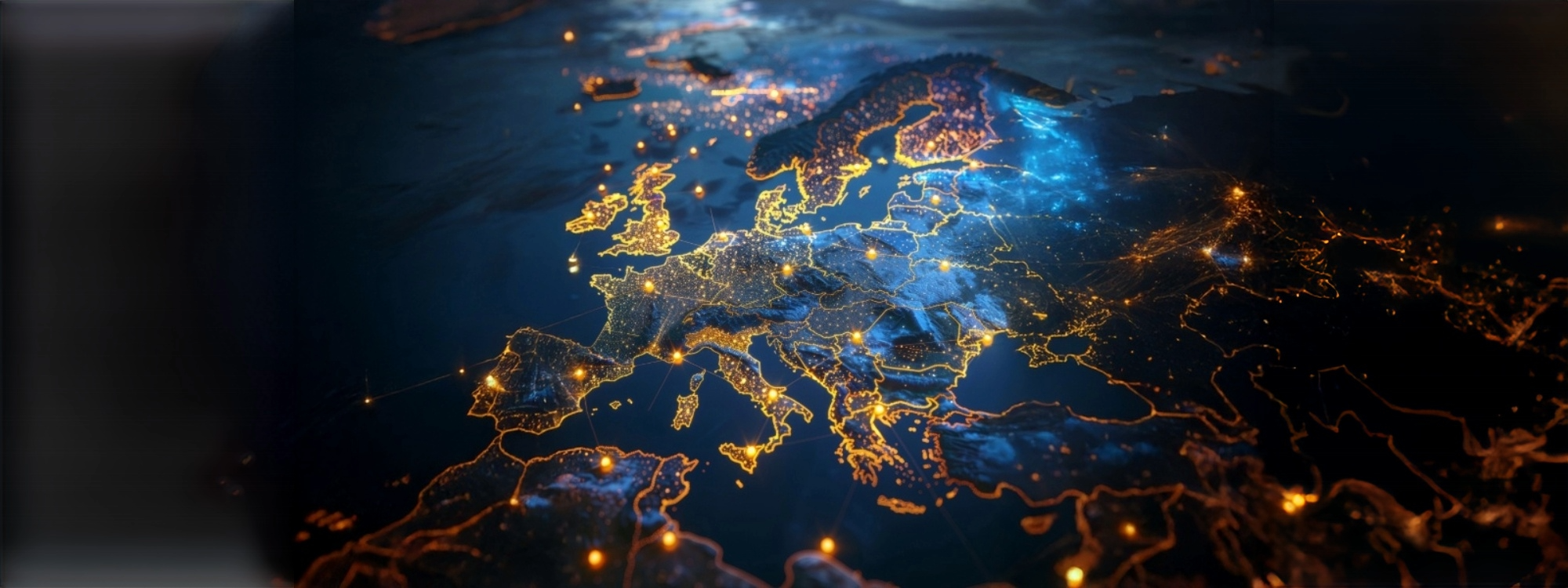
Post-War Europe: How to Rebuild our Security Architecture?
16.06.2026
9:00 - 17:45
Hotel Regina
Rooseveltplatz 15, 1090 Wien
The current phase of new insecurity and unpredictability in Europe, the most prominent aspects of which are Russia’s war of agression against Ukraine and the deterioration of the transatlantic relation, confronts us with the question of how we wish to re-restablish peace and security order in our region in the coming years and decades. It is indeed only during critical junctures marked by rapid change and upheaval that security architectures are likely to be fundamentally reconfigured. ln addition to continuing efforts to support Ukraine, the time seems ripe for an in-depth assessment of Europe’s forthcoming security regime, one that builds on the experiences of the past, masters the challenges of the future and mitigate security ‘vacuums’ an dilemmas that led to mistrust. History – the 1941 Atlantic Charter and the multilateral conversations initiated by Finland in 1969, which led to the Helsinki Final Act – shows us that ongoing hostility should not be an obstacle to thinking about the next step. It is time to “look beyond the horizon”. Just increasing military expenditures cannot be the only option.
This assessment has guided the reflection of the Consortium ‘Post-war Europe: how to rebuild our security architecture?’ since its inception in 2023. Comprising eight institutions that reflect Europe’s geographic diversity and its various security challenges (BIGS, CIDOB, Egmont, iep, Ifri, KEW, oiip & SFPA), the Consortium organizes its final conference in Vienna on June the 16th, 2026, with the generous support of the Konrad-Adenauer-Stiftung – Wien Multilateral Dialogue.
9:00: Arrival & check-in
9:30-10:00: Welcoming word by
Sebastian Enskat
Director Multilateral Dialogue Vienna, Konrad-Adenauer-Stiftung (KAS)
and
Cengiz Günay
Director of the Austrian Institute for International Affairs (oiip)
10:00-11:00: Where European security stands: Presentation & dissemination of the ‘Post-war Europe’ publication
Moderator:
Emiliano Alessandri
Non-resident Senior Fellow, the German Marshall Fund of the United States; Affiliated Researcher at the oiip and Globsec
With the members of the ‘Post-War Europe’ Consortium: Brandenburgisches Institut für Gesellschaft und Sicherheit (BIGS); Barcelona Centre for International Affairs (CIDOB); Egmont – The Royal Institute for International Relations; Institut für Europäische Politik (IEP); Institut Français des Relations Internationales (Ifri); College of Eastern Europe (KEW); Austrian Institute for International Affairs (oiip); & Slovak Foreign Policy Association (SFPA).
11:00-11:15: Coffee break
11:15-12:30 Session 1 – Between Allies and Enemies: How to rebuild the Transatlantic Relationship?
The fundamentals of European security have often been articulated through consolidating and strengthening the transatlantic partnership. In 2026, however, the transatlantic relationship is facing a profound crisis, as increasingly serious questions arise over United States’ commitment to the collective defense of Europe within NATO, but also over its status as an ally. Tensions have been building up for decades, and a change in administration will not be enough to solve the crisis, nor will short-term compromises from both sides – Washington toning down its unproductive rhetoric against NATO and some of its members, withdrawing its claim over Greenland and resuming its support to Ukraine, while European Allies continuing stepping up their defense spending to NATO’s 5% goal -. Rather than merely anticipating and adapting ever more disruptive U.S. positions, is it time for the Europeans to acknowledge “the end of a pleasant fiction” (Mark Carney) and navigate their future without America?
Moderator:
Elke Schraik
Lecturer, University of Vienna, Diplomatic Academy of Vienna, and University of Applied Sciences; Affiliated Researcher at the oiip
Panelists:
Celia Belin
Senior Policy Fellow, Head of the Paris Office, European Council on Foreign Relations (ECFR) (online)
Phillips O’Brien
Professor of Strategic Studies, University of St Andrews (online)
Paul Schmidt
Secretary General, Austrian Society for European Politics (ÖGfE)
Kristina Spohr
Professor of International History, London School of Economics and Political Science (LSE)
12:45-14:00: Finger-food lunch in the oiip’s premises (Währingerstr. 3/12, 2nd floor, at 3 min. walking from Hotel Regina)
14:15-15:30 Session 2 – Europe’s security with or without Russia?
In 2026, Russia’s war against Ukraine is approaching a critical turning point. Beyond restoring peace and justice in Ukraine and providing their eastern partner with solid security guarantees, Europeans should also lucidly define the type of relationship they want to establish with Russia which, since Peter the Great, has always been part of the European security system – for the worst right now –. Should we start looking at an inclusive pan-European security order that could encompass the Russian Federation, which is likely to take generations? On the short term, should we rather aim to ensure peaceful coexistence with Russia by building a security architecture that defends and protects us from its imperialist behavior? What is sure: a new iron curtain in Eastern Europe would only seal the failure of diplomacy, recognize Yalta-like spheres of influence and, ultimately, serve the Kremlin’s interests. However, re-building Europe’s security order together with Russia, not against it, will require time, courage, strength and vision.
Moderator:
Stephanie Fenkart
Director, International Institute for Peace (IIP)
Panelists:
Thomas Birringer
Head of the Ukraine Office, Konrad-Adenauer-Stiftung (KAS)
Marc Perrin de Brichambaut
French Diplomat, former Secretary General of the OSCE (2005-2011)
Susan Stewart
Senior Fellow, Stiftung Wissenschaft und Politik (SWP) (online)
Pertti Torstila
Ambassador, State Secretary for Foreign Affairs of Finland (2006-2014)
15:30-15:45: Coffee break
15:45-17:00 Session 3 – What Europe needs: Checklist for a powerful Europe
Caught between a brutal, revisionist Kremlin and a merciless – if not openly contemptuous – White House, facing the pressure of the so-called Global South towards a ‘de-westernalization’ of the world order, Europeans are constantly outmaneuvered and often marginalized. Donald Trump’s unpredictable foreign policy has played an accelerating role for the EU’s long-awaited strategic autonomy but has also revealed Europe’s major structural deficiencies. The wake-up call is beneficial on the long run but makes Europe’s short-term reaction much more difficult. What does Europe need to speak the “language of power” (Josep Borrell), step-up as a global superpower and overcome its crisis of confidence? Beyond economic competitiveness and reducing dependencies, the way Europeans will build-up new ‘coalitions of the willing’ accross the region, manage enlargement, prevent democratic backsliding and maintain unity and cohesion, will be key.
Moderator:
Loïc Simonet
Research Fellow, oiip
Panelists:
Mats Braun
Director, Institute of International Relations (IIR)
Elisabeth Johansson-Nogués
Research Professor, Jean Monnet Chair, Institut Barcelona d’Estudis Internacionals
Jana Puglierin
Senior Policy Fellow, Head of the Berlin Office, European Council on Foreign Relations (ECFR)
Yurii Vitrenko
Ambassador, Permanent Representative of Ukraine to the International Organizations in Vienna
17:00-17:45: Round table on the future of neutrality in Europe
Registrations
Buchungen sind für diese Veranstaltung nicht mehr möglich.